TheDinarian
News • Business • Investing & Finance
đź’ĄJerome Powell calls for DeFi regulationđź’Ą
The Fed Chairman cited structural issues in DeFi
September 30, 2022
post photo preview

(Dinarian Note: This was sent in a Linqto email broadcast today, interesting word I have been hearing nonstop across the news and now out of Powells mouth himself... "RIPPLE".. Just Coincidence?)

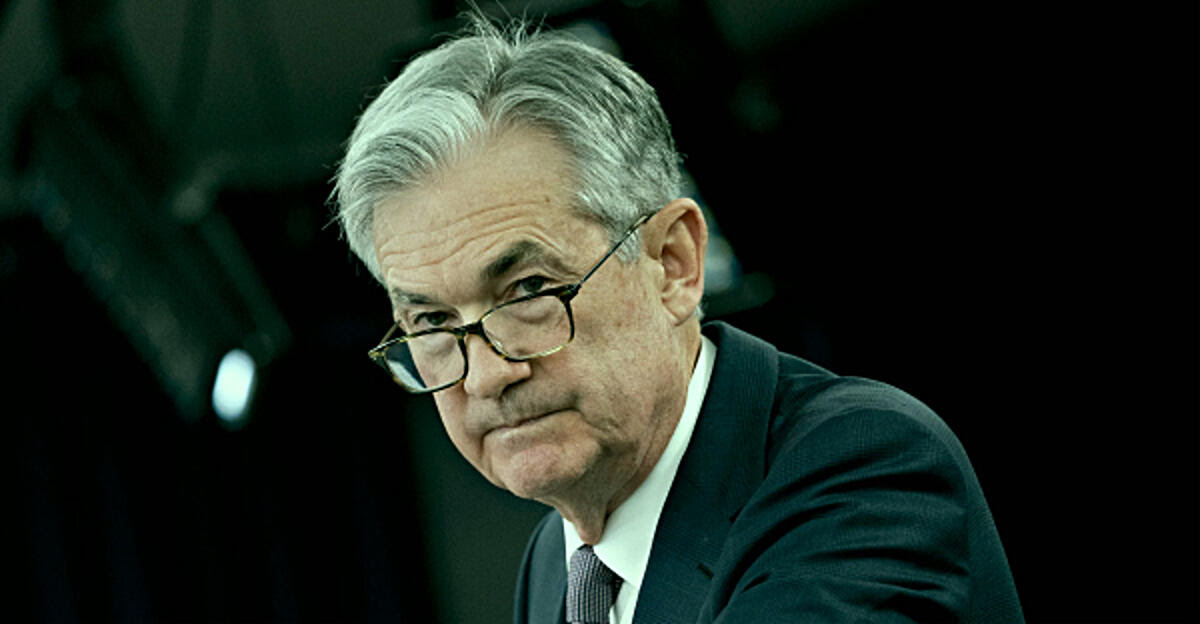
Federal Reserve Chairman Jerome Powell spoke about DeFi and the Fed's Central Bank Digital Currency ("CBDC") program at a conference hosted by the Banque of France earlier this week.

Powell called for more regulation in DeFi suggesting that the monetary policy normalization worldwide has revealed "significant structural issues" in digital asset markets.

The Fed Chairman said, "within the DeFi ecosystem, there are these very significant transparency, lack of transparency issues."

Powell made reference to the crypto winter and pointed out that the interaction between DeFi and the traditional banking system was too small to have caused any negative đź’Ąrippleđź’Ą effect in the broader financial system. However, he suggested that it could be if regulatory guard đź’Ąrailsđź’Ą are not put in place.

Furthermore, Powell was quick to acknowledge the quick adoption of DeFi, and appeared to suggest that any regulatory action would be preventative to protect consumers, saying "there is a real need for more appropriate regulation so that as DeFi expands and starts to touch more retail customers, more appropriate regulation is in place.”

Finally, he gave an update on the CBDC program, suggesting that it could take a couple of years before they conclude whether or not to implement one. He wants the Fed to investigate the implications of a CBDC, and whether or not it's something that should be pursued.


community logo
Join the TheDinarian Community
To read more articles like this, sign up and join my community today
1
What else you may like…
Videos
Podcasts
Posts
Articles
How Is XRP's Utility Expanding?

@Ripple CTO Emeritus @JoelKatz on where XRP is headed:

"Tokenized securities. Money market funds. Stocks. Repos. Loans."

XRP in a Minute ⬇️

00:01:03
🚨Cherokee elder and knowledge keeper on the true nature of the UFO/UAP phenomenon🚨

👉Knowledge is power...📚

🚨 Cherokee elder and knowledge keeper shares that Native American traditions have long understood the true nature of the UFO phenomenon, viewing it through a spiritual and cultural lens far predating modern reports.

His perspective highlights generational accounts of nonhuman intelligence and aerial phenomena deeply embedded in indigenous oral histories across the Americas.

This longstanding awareness contrasts with contemporary government disclosure efforts and adds indigenous context to the global conversation.

00:03:30
Regulation, not tech, is crypto's next frontier! 🚀

@YourBroQuincy (Lead Dev at @XDCFoundation) says clear rules are CRITICAL for mainstream adoption and institutional onboarding.

Liquidity, AI, & why the 'Wild West' is over.

00:14:43
🚨 Chutes is being framed as a Hyperliquid-style breakout for decentralized AI inference, with live revenue, verified GPU infrastructure, and a direct challenge to centralized cloud AI 🚨

Chutes is gaining attention as a decentralized AI inference platform that claims to combine real usage, cryptographic verification, confidential computing, and open-source infrastructure into a working production system. The thesis is simple: instead of trusting Big Tech clouds with AI workloads, users get a distributed compute layer built around verification and privacy.

🔑 Key points

🔹 Chutes is live in production and reportedly scaled to more than 1,170 active GPU nodes, including large numbers of Nvidia H200s and Blackwell-class hardware.

🔹 The platform says it has processed nearly 38 trillion tokens since launch across 53 deployed applications and more than 700,000 registered users.

🔹 The team reportedly cut unprofitable usage programs, reduced total token volume, and still improved revenue efficiency, with revenue per GPU rising sharply after removing subsidized traffic.

🔹 Chutes is using post-quantum cryptography, trusted execution environments, and Nvidia confidential ...

🚨 Chutes is being framed as a Hyperliquid-style breakout for decentralized AI inference, with live revenue, verified GPU infrastructure, and a direct challenge to centralized cloud AI 🚨
🚨 JPMorgan’s criticism of the CLARITY Act is fueling a fresh power struggle over who gets to write America’s crypto rules 🚨

A new clash is emerging between legacy finance and crypto legislation after JPMorgan CEO Jamie Dimon reportedly warned that the CLARITY Act could let crypto firms offer bank-like products without bank-level oversight. The dispute is quickly turning into a larger fight over regulation, competitiveness, and who controls the future architecture of digital finance in the United States.

🔑 Key points

🔹 Jamie Dimon reportedly called the CLARITY Act a threat to the financial system, arguing it could allow crypto firms to offer yield-like products while avoiding the capital, reserve, and oversight burdens traditional banks face.

🔹 Senator Cynthia Lummis pushed back publicly, framing the issue as a global strategic race and warning that if the U.S. does not set digital asset standards, other powers will.

🔹 The core tension is whether the bill creates legitimate regulatory clarity or simply opens the door to regulatory arbitrage for crypto platforms operating outside the traditional banking...

🚨 JPMorgan’s criticism of the CLARITY Act is fueling a fresh power struggle over who gets to write America’s crypto rules 🚨
👉 Coinbase just launched an AI agent for Crypto Trading

Custom AI assistants that print money in your sleep? 🔜

The future of Crypto x AI is about to go crazy.

👉 Here’s what you need to know:

đź’  'Based Agent' enables creation of custom AI agents
đź’  Users set up personalized agents in < 3 minutes
đź’  Equipped w/ crypto wallet and on-chain functions
đź’  Capable of completing trades, swaps, and staking
💠 Integrates with Coinbase’s SDK, OpenAI, & Replit

👉 What this means for the future of Crypto:

1. Open Access: Democratized access to advanced trading
2. Automated Txns: Complex trades + streamlined on-chain activity
3. AI Dominance: Est ~80% of crypto 👉txns done by AI agents by 2025

🚨 I personally wouldn't bet against Brian Armstrong and Jesse Pollak.

👉 Coinbase just launched an AI agent for Crypto Trading

Peter Schiff says "prepare for a crypto black Monday."

I am very bullish on XDC.🔥

Here’s a few reasons:

1. Trade finance leaderâś…

“XDC is redefining global trade finance by replacing slow, paper-heavy systems with a scalable, blockchain-based network.”

2. Built for institutionsâś…

“The XDC Network is purpose-built for institutions, offering seamless integration with legacy financial systems like SWIFT and ISO 20022, standards widely used by banks and financial institutions.”

3. Strong partnershipsâś…

“XDC has collaborated with major industry players like Deutsche Telekom, SBI Japan, and Utila. It has also joined the Ubyx Foundation, which is developing stablecoin-based solutions for global settlements.”

Documented of course.📝👇

OP: @SMQKEDQG

post photo preview

🚨 U.S. banks tap The Clearing House to build a tokenized deposit network for interbank payments 🚨

The Clearing House is set to operate a tokenized deposit network for U.S. banks, giving the country’s biggest financial institutions a new rail for moving tokenized commercial bank money between banks.

🔑 Key points

🔹 The Wall Street Journal reported that The Clearing House will run the tokenized deposit network for U.S. banks.

🔹 The Clearing House already operates major payment systems including CHIPS, EPN, and RTP, making it a natural operator for the new network.

🔹 It is owned by 21 banks, including JPMorgan, Citi, Bank of America, and Wells Fargo, plus multinational shareholders such as TD, BMO, Barclays, Deutsche Bank, HSBC, and Santander.

🔹 Many large U.S. banks already have blockchain-based tokenized deposit systems for their own corporate clients, but those systems mostly do not work for interbank transfers.

🔹 The new network is meant to support interbank ...

post photo preview
How USDC Wins the Hyperliquid Deal🤔
 
USDC "wins" the Hyperliquid deal by securing dominant distribution and deeper integration into one of crypto's fastest-growing on-chain perpetuals platforms, in exchange for sharing most of the USDC reserve yield (up to ~90%) back with Hyperliquid.
 
Background on the Deal: Hyperliquid had ~$5–6B in USDC deposits (a huge chunk of total USDC supply, often cited around 7–8%). Previously, the interest/yield on those reserves (~$180–250M annually at prevailing rates) mostly flowed to Circle (issuer) and Coinbase (key partner/treasury handler), with little returning to Hyperliquid.
 
In late 2025, Hyperliquid ran an RFP for a native stablecoin (USDH) to capture that revenue. Native Markets won the community vote, and USDH launched as an "Aligned Quote Asset" (AQA).
 

In May 2026, Native Markets sold USDH brand assets to Coinbase. USDH is being sunsetted over time (with feeless conversions/redemptions to USDC/fiat), and USDC becomes the primary/official Aligned Quote Asset on Hyperliquid. Coinbase acts as the main treasury deployer; Circle handles minting, redemptions, and cross-chain (e.g., CCTP).


How USDC Wins: 🔑 Key Advantages

Massive, sticky distribution in a high-growth venue: Hyperliquid is a leading on-chain perp DEX. USDC gains preferred status as the quote asset for most trading pairs, reducing friction vs. bridging/swapping other stables. This concentrates liquidity, improves efficiency, and funnels more capital flows through USDC.

  • Deep on-chain integration: Builds on prior Native USDC + CCTP launches. Coinbase's involvement adds fiat on/off-ramps and institutional trust. USDC was already dominant (~95% of stables on the platform); this formalizes and expands it.
  • Regulatory and brand alignment: Ties USDC to a high-profile, high-volume platform at a time when USDC has gained transaction volume momentum (surpassing USDT in some months post-regulatory clarity like GENIUS). It strengthens USDC's positioning vs. USDT (which dominates on centralized venues like Binance).
  • Longer-term consolidation play: Analysts see this as part of stablecoin market consolidation around established players with liquidity and infrastructure. Fewer conversion layers = better efficiency for USDC.
     

The Trade-Off (and Hyperliquid's Win)Hyperliquid gets ~90% of the reserve yield (estimates: $135–160M+ annually at current balances, potentially scaling to $300–500M with growth), funneled into protocol revenue/HYPE buybacks. This is roughly double what they got from USDH and turns stablecoin balances into a resilient revenue stream (less volatile than trading fees).

For Circle/Coinbase, they give up a big share of yield (analysts estimate $60–80M hit to combined EBITDA) but retain/expand USDC's role as the backbone stable on a major platform. It's a strategic distribution win over building or competing with a new native coin.

 
🎯Bottom Line: USDC trades some margin for premier, high-volume real estate in perpetuals/DeFi trading—the exact use case driving massive on-chain dollar demand. This cements its lead in the evolving stablecoin wars, especially as platforms demand better economics. The deal highlights shifting power dynamics: big platforms now negotiate hard for yield share.


   🙏 Donations Accepted, Thank You For Your Support 🙏

If you find value in my content, consider showing your support via:

đź’ł Stripe:
1) or visit http://thedinarian.locals.com/donate

💳 PayPal: 
2) Simply scan the QR code below 📲 or Click Here: 

🔗 Crypto Donations Graciously Accepted👇

XRP: r9pid4yrQgs6XSFWhMZ8NkxW3gkydWNyQX
XLM: GDMJF2OCHN3NNNX4T4F6POPBTXK23GTNSNQWUMIVKESTHMQM7XDYAIZT
XDC: xdcc2C02203C4f91375889d7AfADB09E207Edf809A6

 
Read full Article
post photo preview
Handshake Wants to Be the Front Door to Bittensor’s Agent Economy

In this Beanstock interview, Harry Jackson of Subnet 58 (Handshake) lays out a thesis that’s worth understanding even if you never buy a single SN58 alpha token. He also explained where Bittensor’s agentic layer is heading.

We wrote the high-value distillation:

The one-line thesis

Handshake wants to be the front door to the agent economy on Bittensor. The Amazon-like gateway where AI agents discover, pay for, and stack together skills from across all 128 subnets.

Why this matters now
  • There’s a critical distinction Harry emphasized: AI is intelligence, but agents need tooling. An LLM without payment rails, plugins, and workflow infrastructure is “a young person trying to cut a tree down with a pen knife.”
  • Agent-to-agent commerce is on the edge of going viral. Harry’s prediction for the tipping point: a woman in her 40s lets her agent do her shopping end-to-end (research, stock check, autonomous payment), posts it to social media, and it becomes the “four-minute mile” moment everyone copies.
  • Bittensor is uniquely positioned because agents don’t care about marketing or pretty UIs. They only care about best-in-class products and services. That’s exactly what Bittensor’s 128 subnets produce.

The product reality (what’s currently shipping)

  • Handshake is live with paying users generating a few thousand USD in revenue as of today. The business model: 2% of every transaction on the platform.
  • The flywheel is Amazon-like: better skills → more agents arrive → providers get distribution → more skills get added → cycle repeats.
  • The headline product on the way is Axiom. This is an agent that trades subnets while you sleep. Built around the realization that what the Bittensor community wants from agents isn’t generic skills; it’s more TAO. Each “hole” they find in the agent becomes a new tradeable skill on the marketplace.

The investment angles (read these carefully)

  • The moat is data, not distribution. Every workflow run by an agent generates failure data, success data, payment data. No outside competitor can replicate that without running the marketplace itself.
  • The metric Harry tells you to judge them on is revenue. Not agent count. Not user count. Revenue, which is publicly visible on-chain via the front page of their site. He’s basically inviting investors to hold him to it.

  • The pitch for emissions: the biggest TAM in Bittensor is the agent market, and Handshake is the most integrated subnet, meaning if Handshake wins, the subnets it routes to all win too. Bullish on agents + bullish on Bittensor = bullish on Handshake by transitive logic.

Where Harry stands on the Conviction

  • On the conviction upgrade and locked alpha: he’s fine with it. Handshake is a revenue-focused company, so locked alpha isn’t a survival issue. He acknowledges it’ll be harder on research-stage subnets that need to raise external capital, but argues most subnet founders are thinking long-term, not short-term extraction.
  • On the broader vibe: he just got back from Bittensor events in Spain and San Francisco. He observed that the overwhelming reality of the ecosystem is people working hard to build the best products. “It’d be a lot easier in some ways to build a company outside of Bittensor.” The only reason to do it on Bittensor is if you actually want the moonshot.

Full interview below:

🙏 Donations Accepted, Thank You For Your Support 🙏

If you find value in my content, consider showing your support via:

đź’ł Stripe:
1) or visit http://thedinarian.locals.com/donate

💳 PayPal: 
2) Simply scan the QR code below 📲 or Click Here: 

🔗 Crypto Donations Graciously Accepted👇

XRP: r9pid4yrQgs6XSFWhMZ8NkxW3gkydWNyQX
XLM: GDMJF2OCHN3NNNX4T4F6POPBTXK23GTNSNQWUMIVKESTHMQM7XDYAIZT
XDC: xdcc2C02203C4f91375889d7AfADB09E207Edf809A6

Read full Article
post photo preview
🚨The State Of Bittensor (TAO)🚨
Greg Schvey | COO at Yuma Group

Last week at the @YumaGroup Summit I had the opportunity to present on The State of Bittensor. That presentation is in the thread below. If you choose to read it, I'd ask that you keep the following three things in mind:

  1. This is just one guy's view of what was the most relevant for a 25-minute talk; a difficult filter for such a dynamic industry.
  2. The slides were designed to supplement a talk; I've done my best to replicate what I recall of the talk in the accompanying X posts.
  3. The topic of the Summit was "The Tipping Point" - a candid assessment of what could lead to Bittensor's breakout success and what evidence we see of that today - which also thematically anchored this presentation.

Let's dive in:

We are in the most important race in human history – the race for intelligence itself. AI has advanced beyond the point of no return. As an example of what I mean: Ramp is a widely used financial services platform for companies. They looked at spending and revenue across their clients since the launch of ChatGPT: Companies who did not spend on AI have had flat revenue for the last three years. The top quartile of AI spenders have grown revenue by more than 100%.

We are already at the point where investing in AI is a matter of survival. But what exactly are we getting for the hundreds of billions being spent? Right now, its overwhelmingly going to corporations who have repeatedly shown they don’t have our best interest in mind.


Claude Opus 4.6 – the leading deep thinking model, had a measured hallucination rate of 16% in February. Then, without telling anyone, Anthropic throttled its reasoning – presumably to reduce GPU utilization – and didn’t tell anyone. Hallucinations climbed to 33% - a 98% increase.

They only admitted it after third party benchmarking proved it. And they were still charging everyone at the same price the whole time. Even since my talk last week, they've supposedly been found to be throttling people simply because HERMES.md was in their commits. You may say, "well there are solid open source options..."


Yes, open source models have gotten very good, but they’re not immune to capture either. Try asking DeepSeek what happened in Tiananmen Square and then let me know if that’s the intelligence you want to trust.


This needs to be addressed right now or it will be too late. To give you a sense of what I mean, this is a chart of the total annual commits on GitHub. That’s 500% growth since the launch of ChatGPT in 2022. From 200M per year to a one billion in 2025. 2026 is on track for **14 billion** The genie is out of the bottle – there is no going back; we are already at the exponential inflection point.

This reminds me of many years ago: Bitcoin shined a light on how much our rights were impacted when we became dependent on private companies to run our day-to-day lives.

Your right to privacy? That doesn’t extend to your bank account. Your "money" is just a ledger at a private company, available for interrogation and suspension at any time. Bitcoin gave us back the sovereignty of our wealth.

Similarly, we’ve depended on things like privacy of our medical records and attorney client privilege for our entire lives. What do you think is going to happen when a private company’s servers are giving you legal and medical advice? Who are you going to trust for that intelligence? The company that lobotomized its top model? The model constrained by the foreign governments? As I said at the beginning, we’re in the most important race in human history and Bittensor well may be our best shot at winning.


One of the things about having a different model to produce intelligence is it requires an economic system suited to it. Subnets are the intelligence and economic engines that drive Bittensor’s value. That’s why the Summit was themed around The Tipping Point: understanding how subnets can reach breakout success and what we can do to help.

To summarize Bittensor's intelligence economics: miners create intelligence for which they earn subnet tokens. In many cases they sell those tokens to fund operations, putting downward pressure on token prices and decreasing the incentive to mine (similar to bitcoin). In parallel, if that intelligence is being used to generate real world value, one of the parties who benefits from that value (e.g. the Operator monetizing it, institutions using intelligence commodities to advance their research, etc.) can buy the subnet tokens to keep token prices elevated and sustain the miner incentive.

Investors get to participate in this process, often supporting token prices before the commercial value of intelligence is realized, and/or subsequently holding an asset that parties gaining fundamental value from the intelligence (eg Operator or others) will need to purchase at some point in the future if they want to maintain sufficient incentives for the intelligence machine to continue running.

For Bittensor to succeed, this value loop has to work. So, to understand the State of Bittensor, we have to take a look at how that’s going today and what that means for the network overall.


One of the many unique features of Bittensor is that subnets are native to the protocol. That is not the case on most crypto networks where the true utility lives in smart contracts with no direct tie to network value.

As an example, Polymarket has seen 800% growth in volume this year. Users can bet any arbitrarily large amount of value on Polymarket for a few cents of network fees. There is nothing tying that to value of the network’s native token, which is down 80% over the same period as Polymarket’s amazing success.


Conversely, Bittensor subnets are intrinsically linked to $TAO. If you want $1,000 worth of subnet exposure, you first need $1,000 of TAO. We analyzed subnet pool data surrounding the announcement of @tplr_ai's recent training run and normalized across them by indexing them to a starting level of 100.

As shown by the orange line, there was no material change in pool size for non-Templar subnets over the observation period. There was however, major inflow into Templar’s pool. Given Bittensor’s unique network model, we saw a direct correlation to the change in TAO price over the same period. As value flows into subnets, the whole network benefits. A rising boat lifts the tide, so to speak.


That can go both ways. When Sam left, we saw something similar in reverse; as value was exfiltrated from the network, it started in Covenant subnets and dragged TAO down with it. You know what else we saw in the data though? For all of the noise about concerns of Bittensor’s future, the other subnet pools were mostly unchanged.

The event was interesting because it reminded me of the early days of bitcoin: people would say Bitcoin was only used by drug dealers on the internet. I'd stare at them aghast because in the same breath they told me that an open, permissionless network was used to reliably move money anywhere in the world in minutes by the most untrustworthy people on the planet and yet they didn't understand how the technical feat required to achieve that would create tremendous value.

The Covenant situation is similar: people were concerned about the operator's exit, rather than realizing the only reason we care is because a ground-breaking technical innovation was achieved. But even bigger than that: Bittensor has 128 subnets currently, each striving to generate value for themselves and, transitively, the network as well.


And we’re seeing that occur – Templar was not unique in that regard. The same pattern emerged around the Intel publication on @TargonCompute. The non-Targon pools remained largely unchanged. Targon saw heavy inflows. TAO price climbed with it.

Again: rising boats lift the tide. And there are many boats in Bittensor right now.


We’re seeing major technical innovations at an increasing rate.

Just a few examples from the last couple weeks:

@QuasarModels just announced a custom attention architecture targeting 5M token context windows.
 
@IOTA_SN9 developed a technique that compresses data flowing between distributed GPUs by 128x with little to no loss in training quality, increasing viability of training large AI models across internet-connected machines worldwide.
 
We're seeing the building blocks start to form whereby competitive large generalized models can eventually be built. In the meantime, we're also witnessing more targeted, niche players start to pull ahead in their respective fields.
 
During the presentation, I gave the example of @resilabsai achieving 90% accuracy on their home valuation model, making it the most performant open source model and quickly approaching state of the art. Quite literally as I was explaining this during the talk, @markjeffrey pointed out they had just achieved 98% accuracy.
 
In the time between when I prepared the presentation and actually presented, they went from best open source to at or near state of the art - only further highlighting the unique value of Bittensor's open, competitive intelligence creation cycle.
 
 
And the tech that’s being built on Bittensor is getting real attention from serious players. Again, just a few examples of many: Harvard partnered with @Chutes on research about AI inference efficiency. Valeo – an auto company with $20B in annual revenue – is working with @natix on an AI model for self-driving cars. @zeussubnet- the weather forecasting subnet, is the only party in the world allowed to use data WeatherXM’s network of global weather sensors for commercial purposes. And there are in fact many subnets already commercializing their intelligence.


Most of us are already aware of Chutes seven-figure ARR, but a few other examples:
 
@LeadpoetAI– which uses their Bittensor subnet to source sales leads, announced earlier this year that they crossed $1M ARR
 
@Bitcast_network– the content creation platform built on their subnet competition – is already operating profitably
 
@lium_io– a hardware subnet – has bought more than 4,000 TAO worth of their token
 
Remember the economic model I outlined earlier; we’re seeing real evidence that it’s starting to work across many subnets. Intelligence built on Bittensor, capturing value in the real economy, and bringing it back into the network.
 
Action shot of this slide courtesy of @Tom_dot_b
 
 
That’s why when we look at Bittensor we like to look at Total Network Value (TNV);
$TAO market cap is only part of the story in Bittensor. TNV = market cap of TAO + market cap of subnets – tao in the pools [as not to double count] The actual value of this network is already higher than most people realize. And notably, subnets make up an increasing proportion of TNV – recently crossing 35% - as value continues to flow into the pools.


Interestingly, we recently noticed a change in TNV: In particular, despite all the volatility in TAO, the dramatic subnet issuance curves, etc. - the combined subnet market cap had been remarkably consistent around $750 million for most of the last year, until recently.
 
It’s nearly doubled over the last few months – a clear breakout in the trend. If you were looking for Tipping Point, it might look something like this...


I hear a lot that that value is relatively concentrated in the largest subnets. And the market cap distribution does indeed reflect that, but that’s not necessarily a bad thing.


This is the market cap distribution of the S&P 500. Many healthy economic systems tend towards Pareto distributions. And so what if some subnets are worth more? As we showed earlier, this is an ecosystem that will win or lose *together* And we’re seeing that play out every day.


We track announcements of subnets utilizing each others infrastructure and intelligence. Just as an example, we identified at least eight subnets who announced that they use Chutes for inference. But we have dozens of similar examples of cross-subnet collaboration across many subnets like
 
What’s notable about this:
 
1. Collaboration seems to be happening at an increasing pace as subnets continue to mature and build out contiguous pipelines of AI infrastructure
 
2. Keeping money circulating within an economy creates a money multiplier. Capital circulating within a single economy without leaving creates economic value for each party it passes through, without having to bring in new capital. That’s uniquely possible here because of the diversity of infrastructure built on Bittensor.
 
This network is not 128 discrete growth drivers; it’s increasingly functioning as an interconnected graph, which has substantially more stickiness and value And the pace is about to increase dramatically:


We’re starting to see increasing agents operating on Bittensor: subnets mined by agents, subnets operated by agents...
 
Consider the Bittensor value flywheel:
 
-An intelligence goal is established
-Miners compete to achieve the goal
-That produces intelligence
-Intelligence generates value
 
That’s happening today, as we’ve seen earlier in this discussion.
 
As agents get more capable, that flywheel spins faster and faster. Permissionless entry means any agent can compete. Protocol-native economic incentives mean good work gets rewarded. Bittensor is uniquely advantaged for agentic speed over guarded, centralized alternatives with corporate procurement cycles.
 
That also means exploits will be found faster. But, it also means solutions that harden the network against them will be found faster as well.
 
Accordingly the impact of the network primitives – incentives, accessibility, governance, security, reliability, and all the infrastructure we’re building around the network - have an exponentially larger impact. It is critical that we get these right. The time to nail this, is right now. If we don’t someone else will.


The good news is, for now, Bittensor seems to be in the lead The 30-day moving average of Daily active wallets just crossed a record, approaching 10,000 Up 100% just in the last year.


We’re also seeing subnet ownership increasingly diversify and distribute. The median number of holders of subnet tokens at 2,000 is a 10x increase since the dtao launch a year ago. And at Yuma, we spend a lot of effort and resources to help broaden that access.


Yuma currently partners with 16 custodian and wallet providers to bring Bittensor access to the masses As an institutional-grade validator, the relationships and service we offer give them the confidence to make TAO staking available to millions of end users.
 
During the Summit, we announced that BitGo’s clients will now have access to subnet token staking through our partnership, making subnet investing available to customers of one of the world’s largest custodians.


We also help people gain access to subnets via investment vehicles. The Yuma Composite Fund gives investors access to a market-cap weighted portfolio of subnets through traditional investment structures. The Yuma Large Cap Fund gives investors concentrated exposure to Bittensor's largest subnets.
 
Our institutional asset management team handles everything from initial subnet token purchases, to portfolio rebalancing, custody, and reporting. The appeal for institutions is obvious, but even for the Bittensor native, it’s an amazingly simple way to get access to a broadly diversified portfolio, rebalanced regularly.
 
Between the breakout performance of subnets, the attractive staking rewards, and benefits of diversification, the Yuma funds have outperformed TAO materially year to date [as of when the presentation was created] Nearly 3x outperformance relative to TAO.


And last but definitely not least, our subnet accelerator has helped a wide range of companies access Bittensor. We help them acquire subnet slots, design incentives, provide marketing assistance, review pitch decks, make introductions to other investors, etc. At Yuma we deeply believe in the power of subnets and have helped many of the network's leading intelligence providers start and succeed.


Disclaimer: For informational purposes only.  Nothing herein should be construed as financial, investment, legal, or tax advice.  This material does not constitute an offer to sell or a solicitation of an offer to buy any securities or tokens.  Investing in digital assets involves significant risk, including the potential loss of principal.  Subnet tokens do not represent equity or ownership interests in any entity.  Performance comparisons and index references are illustrative only and not indicative of future results.  Charts and indices are based on methodologies and assumptions that may change and may not reflect actual market conditions or liquidity.
 

  🙏 Donations Accepted, Thank You For Your Support 🙏

If you find value in my content, consider showing your support via:

đź’ł Stripe:

1) or visit http://thedinarian.locals.com/donate

💳 PayPal: 

2) Simply scan the QR code below 📲 or Click Here: 

🔗 Crypto Donations Graciously Accepted👇

XRP: r9pid4yrQgs6XSFWhMZ8NkxW3gkydWNyQX
XLM: GDMJF2OCHN3NNNX4T4F6POPBTXK23GTNSNQWUMIVKESTHMQM7XDYAIZT
XDC: xdcc2C02203C4f91375889d7AfADB09E207Edf809A6

Read full Article
See More
Available on mobile and TV devices
google store google store app store app store
google store google store app tv store app tv store amazon store amazon store roku store roku store
Powered by Locals