TheDinarian
News • Business • Investing & Finance
💥CFTC Chair responds to FTX collapse, acknowledges several meetings💥
November 28, 2022
post photo preview

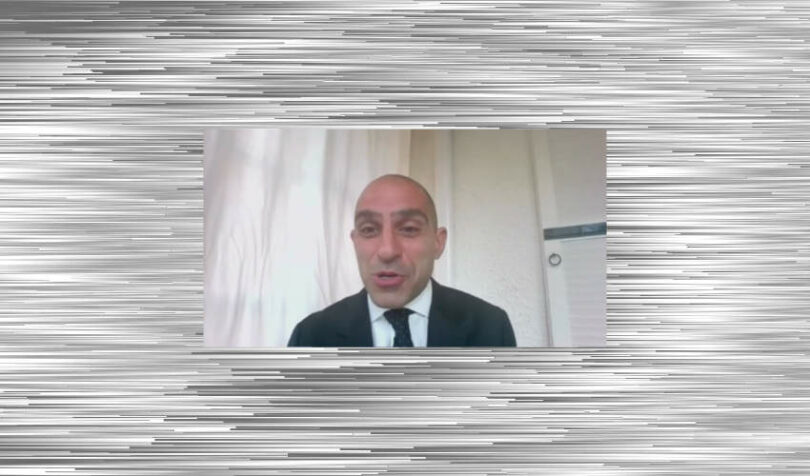
Commodity Futures Trading Commission (CFTC) Chair Rostin Behnam implied that if a regulatory framework had been in place, the FTX collapse might not have been avoided. However, he highlighted the reasons it would be less likely. He also justified the “many meetings” he had with the FTX team over their application for CFTC rule changes for crypto derivative trading. 

At the Financial Times Crypto and Digital Assets Summit, Behnam was asked whether recent events in the cryptocurrency sector have strengthened the need to regulate the crypto cash market, over which the CFTC has no regulatory or supervisory oversight. It only has enforcement authority when someone complains.

“We have to talk about the FTX matter obviously,” said Behnam. “I can’t suggest that if we had a regulatory framework over FTX, specifically the non-US entities, it would have not happened.”

However, he outlined the standard tools he hopes will be enacted in future regulation to give the CFTC the authority to regulate the cash market for commodity cryptos. These include steps to:

  • prohibit co-mingling of house money and customer money
  • use registered custodians to separate customer money
  • require books and records for audit at least annually
  • require reporting for post trade
  • provided equal access and a fair and transparent order book.

Reports from the new FTX CEO show the company failed to live up to every one of those points, although shockingly, FTX did get audited.

Behnam also highlighted that one of the few FTX subsidiaries that did not enter Chapter 11 bankruptcy was Ledger X, the CFTC-regulated derivatives firm. Before the new FTX CEO commented on the lack of records, we observed that only Ledger X and the regulated Japanese subsidiary seemed to have proper finance staff.

Would the CFTC be a lighter touch than the SEC?

Two issues came up about divvying up crypto regulation between the CFTC and SEC. The first is the dividing line between which cryptocurrencies are considered commodities versus securities. 

“A vast majority of tokens are likely securities,” said Behnam. “But there are a few at least – I’ve said publicly that I believe Bitcoin and Ether are commodities. But at a minimum we know, at least in the U.S., that Bitcoin is a commodity.”

Behnam sees the divide between a security and commodity is less of a big deal compared to what some are making it out to be.

“We’ll have to figure it out over time. At this point, the only certainty we have is a decision by a judge in a few districts here in the U.S. that has clearly determined that Bitcoin is a commodity. Other than that, we have no clear determination. We’re going to have to get a set of rules and precedent and build off of that over time.”

Behnam pushed back on the idea that the CFTC would be a lighter touch regulator than the SEC. He said the issue is it doesn’t have enforcement authority over the cash commodity market. Most of the CFTC’s work relates to wholesale markets where derivatives are used for risk management. In contrast, cryptocurrency mainly involves retail investors and speculation. 

The CFTC Chair envisions the CFTC regulating part of the market and the SEC handling the rest, with no gaps where tokens can go unregulated.

Many meetings with FTX

Last year FTX applied for changes to regulations to allow end users to trade crypto derivatives directly from its platform without a broker acting as an intermediary. That application has recently been withdrawn following the FTX collapse.

In July, then FTX CEO Sam Bankman-Fried told the Wall Street Journal, “We’re going to have a more complete set of customer protections, disclosures and suitability checks in place than currently exists in the futures industry.” He added, “If anything, we’ll be going a little bit overboard on that.” Those comments did not age well.

Chair Behnam acknowledged that he’d personally had many meetings with FTX. He said, “they very aggressively advocated across Washington for the amendment.” The CFTC Chair highlighted his legal obligation to respond to the application.

“FTX and its management team came in quite frequently and wanted to meet and advocate. Look, if I’m in Washington and someone’s willing to come to Washington and I have time, I’m going to take that meeting. I’m going to remain accessible and want to learn and want to be fair. This was such an important issue not only relative to FTX.” As he pointed out, it would potentially impact the structure of derivatives markets and beyond.

“As the Chairman of the agency, I wanted to be squarely involved to make sure I was seeing what was happening in terms of the process and all parties were involved and felt like they had a fair opportunity to share their input.” His conclusion was that it was a fair, open and transparent process.


Link

community logo
Join the TheDinarian Community
To read more articles like this, sign up and join my community today
0
What else you may like…
Videos
Podcasts
Posts
Articles
⚠️ Ripple appearance at the Headquarters of the Bank of Spain

⚠️ Ripple appearance at the Headquarters of the Bank of Spain, Co-organised by the Reinventing BRETTON WOODS Committee⚠️
September 10 and 11, 2019

Full video: https://youtu.be/kUx1pJ9wadQ?si=FrqIfoeWJHtgBZXa

00:07:08
📽️ One of the most important things we’ve done at Pyth is help bring U.S. GDP onchain 🏛️

Working with the U.S. Department of Commerce to publish official economic data on a public blockchain is a powerful signal of where global market infrastructure is headed. When core economic indicators become cryptographically verifiable, composable, and accessible in real time, it opens the door to a more transparent and more efficient financial system for everyone.

Thanks to Roundtable and Jackson Hinkle for hosting a thoughtful conversation on how this came together and what it means for the future of market data.

In a conversation with Jackson Hinkle

Full interview link: https://www.thestreet.com/crypto/policy/why-washington-is-experimenting-with-public-blockchains-for-economic-data

00:04:14
Patent US10144532B2 | Craft using an inertial mass reduction device

🚀 The Mind-Blowing Patent That Could Revolutionize Space Travel: US Navy's Anti-Gravity Craft! 🛸

December 4, 2018 - The day physics got weird

🤯 What If I Told You...

The US Navy patented a spacecraft that could bend the laws of physics as we know them? No, this isn't science fiction or the latest Marvel movie – this is US Patent US10144532B2, and it's about to blow your mind! 💥

🎯 The Patent That Made Physicists Go "Wait, WHAT?!"

Filed on April 28, 2016, and granted on December 4, 2018, this patent describes a "Craft Using an Inertial Mass Reduction Device" – which is fancy talk for "spaceship that can make itself lighter than physics allows."

Invented by Salvatore Cezar Pais and assigned to the US Department of Navy, this isn't your average paper airplane design. We're talking about technology that could theoretically allow spacecraft to travel at extreme speeds by literally manipulating the fabric of spacetime itself! ⚡

🔬 The Science Behind the Magic✨

👉Here's where it gets really wild:

🌀 The ...

00:05:23
👉 Coinbase just launched an AI agent for Crypto Trading

Custom AI assistants that print money in your sleep? 🔜

The future of Crypto x AI is about to go crazy.

👉 Here’s what you need to know:

💠 'Based Agent' enables creation of custom AI agents
💠 Users set up personalized agents in < 3 minutes
💠 Equipped w/ crypto wallet and on-chain functions
💠 Capable of completing trades, swaps, and staking
💠 Integrates with Coinbase’s SDK, OpenAI, & Replit

👉 What this means for the future of Crypto:

1. Open Access: Democratized access to advanced trading
2. Automated Txns: Complex trades + streamlined on-chain activity
3. AI Dominance: Est ~80% of crypto 👉txns done by AI agents by 2025

🚨 I personally wouldn't bet against Brian Armstrong and Jesse Pollak.

👉 Coinbase just launched an AI agent for Crypto Trading

🚨 Ripple Drops $2.7 B Cash-and-Stock Deal for Full-Stack Financial Platform 🚨

Ripple has agreed to buy (subject to CFIUS and EC clearance) a yet-unnamed “full-stack” payments, FX and treasury-suite provider—valued at $2.7 B, its largest acquisition to date—to fold fiat rails, card issuing and 200+ country licenses directly into the XRP Ledger ecosystem, according to Crypto Threads’ unnamed sources close to the board.

🔑 Key points

🔹 Target profile:

  • 1,100 employees, 42 offices; owns EMI licenses in EU/UK, MSB registrations in 47 U.S. states, PI/PF licenses in Singapore, HK, UAE; processes $48 B annual payments volume, 65 % B2B cross-border.

  • Proprietary FX engine aggregates 450+ correspondent-bank routes plus four CSD access points (Fedwire, TARGET2, BOJ-NET, CHATS); average FX markup 18 bps vs Ripple ODL’s current 60 bps.

  • White-label card platform (Visa Fintech Fast-Track member) with 3.2 M virtual cards issued; instant push-to-debit rails in 70 countries.

🔹 Deal ...

post photo preview
💯 It’s all a scam to keep you enslaved‼️ 💯

The founders are shaking their heads in disgrace.. 🫨

post photo preview

🚨 Institutional Bitcoin Futures Activity Climbs on Clarity Act Markup 🚨

CoinGape reports a 38 % spike in CME Bitcoin futures open interest (OI) to 9.4 B and a record 25,600-lot block trade last week as hedge funds and asset-managers price in passage of the “Financial Innovation and Technology (FIT) Clarity Act,” whose House committee markup added explicit legal definitions for digital-commodity exchanges, broker-dealers and custody.

🔑 Key points

🔹 Volume surge:

CME BTC OI +38 % WoW to 128k contracts (≈ 9.4 B notional); ETH OI +27 % to 4.1 B; both exceed pre-ETF launch levels.

Macro funds behind 62 % of gross longs; net-short ratio among prop desks fell from 0.79 to 0.46, biggest drop since Oct-2021.

🔹 Block-trade record: 25,600-contract (1.9 B) Mar-26 expiry printed via TP ICAP on 14 Jan—largest single-leg institutional BTC futures trade in CME history; counterparties listed as “two large U.S. pensions” per broker note.

🔹 FIT Clarity catalyst:

House Ag & Financial Services committees ...

post photo preview
post photo preview
🚨David Grusch on The Megyn Kelly Show🚨

Earlier this week, UFO/UAP whistleblower David Grusch appeared on The Megyn Kelly Show for a brief but revealing interview. During the conversation, Grusch named individuals he claimed were involved in managing the alleged UFO/UAP Legacy crash retrieval program, statements that immediately drew attention across the disclosure community.

Most notably, Grusch asserted that former Vice President Dick Cheney played a central role in overseeing the program. Cheney’s name has circulated within UFO/UAP research circles for years, but this marks the first time it has been spoken publicly by a former intelligence official who claims direct knowledge of the issue. It is also notable that just weeks ago, journalist Ross Coulthart independently referenced Cheney in a similar context, lending additional weight to the consistency of these claims.

Grusch also named former Director of National Intelligence James Clapper, stating that Clapper was not only aware of the crash retrieval issue, but managed it and helped place individuals into key roles, both publicly and behind the scenes. These are serious assertions that warrant scrutiny and further investigation, given their potential implications for disclosure.

Please watch the full interview and consider its significance within the broader context of the disclosure conversation. Please note that the interview concludes with a paid promotional pitch, and Grusch does not provide any additional comments after the pitch.


  🙏 Donations Accepted, Thank You For Your Support 🙏

If you find value in my content, consider showing your support via:

💳 Stripe:
1) or visit http://thedinarian.locals.com/donate

💳 PayPal: 
2) Simply scan the QR code below 📲 or Click Here: https://www.paypal.com/donate/?business=8K3TZ2YFZ7SMU&no_recurring=0&item_name=Support+Crypto+Michael+%E2%9A%A1+Dinarian+on+Locals+Blog&currency_code=USD


🔗 Crypto Donations Graciously Accepted👇
XRP: r9pid4yrQgs6XSFWhMZ8NkxW3gkydWNyQX
XLM: GDMJF2OCHN3NNNX4T4F6POPBTXK23GTNSNQWUMIVKESTHMQM7XDYAIZT
XDC: xdcc2C02203C4f91375889d7AfADB09E207Edf809A6


Read full Article
post photo preview
Stellar CEO Reveals Where Real Opportunity Lies in Crypto Market: Details

In a recent tweet, Stellar Development Foundation (SDF) CEO and Executive Director Denelle Dixon defines what "real opportunity" is in blockchain as a new financial future beckons.

The SDF CEO was reacting to a recent Bloomberg report on Bank of New York Mellon Corp (BNY), Nasdaq, S&P Global and iCapital participation in a new $50 million investment round by Digital Asset Holdings. This comes as some of Wall Street’s biggest names embrace the technology that underpins cryptocurrencies to handle traditional assets.

Reacting to this development, Stellar Foundation CEO Denelle Dixon stated that every blockchain investment is a bet on a different financial future. Dixon added that seeing banks explore blockchain technology validates what has been known over the years.

Real opportunity defined

While Wall Street’s biggest names betting on blockchain might be one of the most significant adoption milestones in the digital asset market, Dixon defines what real opportunity is and what it is not.

According to the SDF executive director, real opportunity is not replicating old systems on new rails but rather building open networks that fundamentally expand global finance participation.

"But the real opportunity isn’t replicating old systems on new rails—it’s building open networks that fundamentally expand who gets to participate in global finance. That’s the opportunity," Dixon tweeted.

At the Meridian 2025 event, Stellar outlined its long-term privacy strategy, committing to investing in critical privacy infrastructure and building foundational cryptographic capabilities.

Stellar eyes privacy upgrade

A new protocol upgrade is on the horizon for the Stellar network: X-Ray, which lays the groundwork for developers to build privacy applications on Stellar using zero-knowledge (ZK) cryptography.

The protocol timeline testnet vote is anticipated for Jan. 7, 2026, while the mainnet vote is expected for Jan. 22, 2026.

Source

  🙏 Donations Accepted, Thank You For Your Support 🙏

If you find value in my content, consider showing your support via:

💳 Stripe:
1) Visit http://thedinarian.locals.com/donate

💳 PayPal: 
2) Simply scan the QR code below 📲 or Click Here

🔗 Crypto Donations Graciously Accepted👇
XRP: r9pid4yrQgs6XSFWhMZ8NkxW3gkydWNyQX
XLM: GDMJF2OCHN3NNNX4T4F6POPBTXK23GTNSNQWUMIVKESTHMQM7XDYAIZT
XDC: xdcc2C02203C4f91375889d7AfADB09E207Edf809A6

Read full Article
post photo preview
XDC Network's acquisition of Contour Network

XDC Network's acquisition of Contour Network marks a silent shift to connect the digital trade infrastructure to real-time, tokenized settlement rails.

In a world where cross-border payments still take days and trap trillions in idle liquidity, integrating Contour’s trade workflows with XDC Network Blockchains' ISO 20022 financial messaging standard to bridge TradFi and Web3 in Trade Finance.

The Current State of Cross-Border Trade Settlements

Cross-border payments remain one of the most inefficient parts of global finance. For decades, companies have inter-dependency with banks and their correspondent banks across the world, forcing them to maintain trillions of dollars in pre-funded nostro and vostro balances — the capital that sits idle while transactions crawl across borders.

Traditional settlement is slow, often 1–5 days, and often with ~2-3% in FX and conversion fees. For every hour a corporation can’t access its own cash increases the cost of financing, tightens liquidity that could be used for other purposes, which in turn slows economic activity.

Before SWIFT, payments were fully manual. Intermediary banks maintained ledgers, and reconciliation across multiple institutions limited speed and volume.

SWIFT reshaped global payments by introducing a secure, standardized messaging infrastructure through ISO 20022 - which quickly became the language of money for 11,000+ institutions in 200 countries.

But SWIFT only fixed the messaging — not the movement. Actual value still moves through slow, capital-intensive correspondent chains.

Regulated and Compliant Stablecoin such as USDC (Circle) solves the part SWIFT never could: instant, on-chain settlement.

Stablecoin Settlement revamping Trade and Tokenization

Stablecoin such as USDC is a digital token pegged to the US Dollar, still the most widely used currency for trade, enabling the movement of funds instantly 24*7 globally - transparently, instantly, and without the need for any intermediaries and the need to lock in trillions of dollars of idle cash.

Tokenized settlement replaces multi-day reconciliation with on-chain finality, reducing:

  • Dependency on intermediaries
  • Operational friction
  • Trillions locked in idle liquidity

For corporates trapped in long working capital cycles, this is transformative.

Digital dollars like USDC make the process simple:

Fiat → Stablecoin → On-Chain Transfer → Fiat

This hybrid model is already widely used across remittances, payouts, and treasury flows.

But one critical piece of global commerce is still lagging:

👉 Trade finance.

The Missing link is still Trade Finance Infrastructure.

While payments innovation has raced ahead, trade finance infrastructure hasn’t kept up. Document flows, letters of credit, and supply-chain financing remain siloed, paper-heavy, and operationally outdated.

This is exactly where the next breakthrough will happen - and why the recent XDC Network acquisition of Contour is a silent revolution.

It transforms to a new era of trade-driven liquidity through an end-to-end digital trade from shipping docs to payment confirmation – one infrastructure that powers all.

The breakthrough won’t come from payments alone — it will come from connecting trade finance to real-time settlement rails.

The XDC + Contour Shift: A Silent Revolution

  • Contour already connects global banks and corporates through digital LCs and digitized trade workflows.
  • XDC Blockchain brings a settlement layer built for speed, tokenization, and institutional-grade interoperability and ISO 20022 messaging compatibility

Contour’s digital letter of credit workflows will be integrated with XDC’s blockchain network to streamline trade documentation and settlement.

Together, they form the first end-to-end digital trade finance network linking:

Documentation → Validation → Settlement all under a single infrastructure.

XDC Ventures (XVC.TECH) is launching a Stable-Coin Lab to work with financial institutions on regulated stablecoin pilots for trade to deepen institutional trade-finance integration through launch of pilots with banks and corporates for regulated stable-coin issuance and settlement.

The Bottom Line

Payments alone won’t transform Global Trade Finance — Trade finance + Tokenized Settlement will.

This is the shift happening underway XDC Network's acquisition of Contour is the quiet catalyst.

Learn how trade finance is being revolutionised:

https://www.reuters.com/press-releases/xdc-ventures-acquires-contour-network-launches-stablecoin-lab-trade-finance-2025-10-22/

Source

🙏 Donations Accepted, Thank You For Your Support 🙏

If you find value in my content, consider showing your support via:

💳 Stripe:
1) or visit http://thedinarian.locals.com/donate

💳 PayPal
2) Simply scan the QR code below 📲 or Click Here

🔗 Crypto Donations Graciously Accepted👇
XRP: r9pid4yrQgs6XSFWhMZ8NkxW3gkydWNyQX
XLM: GDMJF2OCHN3NNNX4T4F6POPBTXK23GTNSNQWUMIVKESTHMQM7XDYAIZT
XDC: xdcc2C02203C4f91375889d7AfADB09E207Edf809A6


Read full Article
See More
Available on mobile and TV devices
google store google store app store app store
google store google store app tv store app tv store amazon store amazon store roku store roku store
Powered by Locals