TheDinarian
News • Business • Investing & Finance
EU votes for AML legislation impacting crypto. DeFi not particularly targeted
March 29, 2023
post photo preview

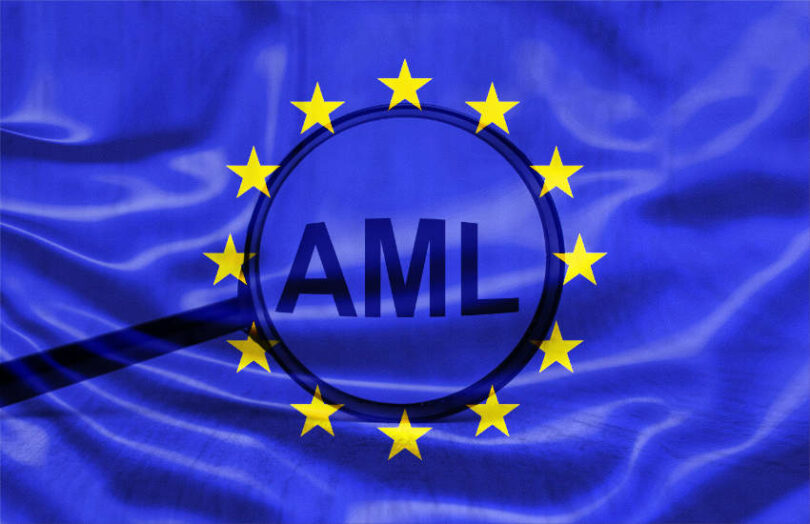
Today the EU parliament voted in favor of three major pieces of anti money laundering (AML) legislation. Crypto payments for goods and services in excess of €1,000 must be subject to AML. And the legislation expands the definition of crypto asset service providers (CASPs) to pull in NFT platforms.

A previous report from The Block stated that the new legislation covers decentralized autonomous organizations (DAOs) and DeFi platforms. However, a spokesperson for MEP Damien Careme told Ledger Insights that he believed today’s legislation still relies on the crypto asset service provider definition specified in the Markets in Crypto-Asset Regulations (MiCAR). It just expands it to NFTs which are explicitly excluded by the first version of MiCAR.

The definition of a crypto-asset service provider (CASP) under MiCAR is a little loose, but Ledger Insights discussions with lawyers indicated it would depend on whether a DeFi protocol can be shown to be centrally controlled. If it is truly decentralized, it will not be considered a CASP. That should mean it is out of scope for AML subject to the unpublished wording of today’s legal text.

Apart from today’s AML legislation, MiCAR has a separate crypto-asset companion regulation for AML, which has already been voted on by parliament. This AML companion legislation has an exclusion clause for so-called P2P transactions. The text defines a P2P transaction as one not enabled by a crypto-asset service provider (CASP). Hence where a DeFi protocol is sufficiently decentralized, transactions with the DeFi protocol are excluded.

How could DeFi protocols be considered CASPs?

So when might a DeFi protocol fall under the EU’s AML legislation?

“Regulators would tell you if we can identify the person running the protocol, that is the person we’d see as the crypto asset service provider,” said Diego Ballon Ossio of Clifford Chance. “If the protocol is decentralized, regulators may struggle in tying the level control to a particular user or jurisdiction that’s running the protocol. Because chances are it is truly decentralized, and the users changing the algorithm are all over the world.”

The large DeFi protocols were founded by organizations, usually with a suffix of ‘Labs’ in their name, but later the protocols became more decentralized. So Aave Labs founded Aave, and there’s Uniswap Labs and Compound Labs.

Ballon Ossio noted the difficulty in identifying a DeFi Labs company as clearly being a CASP is one of the reasons that MiCAR is described as not intended to target DeFi.

However, he believes enforcement could be another matter. If you ask regulators in various jurisdictions whether the Labs company is a CASP you’re likely to get different responses. Some will see them as a controlling entity to the extent they keep sufficient governance tokens.

“The question is can you prove it, make a case, bring an enforcement action?” he added. “You have layers of regulatory decision making that might prevent anything happening to the protocol. But the fundamental principle of whether it is out of scope because it’s a protocol is something I think that regulators will push back on.”

However, none of the Acts and Regulations are final, so things could still change.

MiCAR and its companion AML legislation have been through the trilogue process and are up for another vote on April 19.


Link

community logo
Join the TheDinarian Community
To read more articles like this, sign up and join my community today
0
What else you may like…
Videos
Podcasts
Posts
Articles
🚨Senate Delays CLARITY Act Vote After Coinbase Pulls Support🚨

The bipartisan CLARITY Act seeks to clarify digital asset rules by dividing oversight between the SEC and CFTC, while covering stablecoins, DeFi, and tokenized assets. Coinbase withdrew support over a provision blocking interest payments on payment stablecoins, arguing it favors banks that pay depositors just 0.14% while stablecoin reserves earn 3.8% in Treasuries. Bank of America CEO Brian Moynihan countered that yield-bearing stablecoins could drain $6 trillion in deposits, hurting lending for small businesses. Lawmakers are negotiating revisions, with a possible vote by late January.

Brad Garlinghouse, the CEO of Ripple chimes in...

00:00:31
EXCLUSIVE: Visa Direct's $1.7 trillion payout network just added stablecoin funding and stablecoin payouts "push to stablecoin wallet"

Visa Just Turned Every Wallet Into a Bank Account—And You Probably Missed It 💸🚀

Visa Direct quietly flipped two switches that make $1.7 trillion of annual payout volume speak fluent crypto. No press-release fireworks 🎆—just a Slack ping from BVNK engineers: “We’re live.” Here’s why that ping is louder than it sounds. 🔊

1️⃣ The “push-to” menu grew a new button

🔹Merchants, neobanks & creator platforms already use Visa Direct to shove money to cards, bank accounts, PayPal, Venmo, you-name-it.

🔹 Now they can push USDC straight to any on-chain wallet the recipient controls. Same API call, different destination.

⏱️ Settlement: ~90 seconds
💰 Cost: fractions of a cent
🌍 Geography: anywhere with internet

2️⃣ Treasury teams can stop apologizing for FX 🏦

🔹 Until today, if you funded cross-border payouts you wired fiat into Visa’s prefund account and waited for the bank’s 8-hour cut-off.

🔹 Starting today you can drop USDC (or ...

00:06:25
Keep Your Heads On A Swivel 👀 Out There
00:00:47
👉 Coinbase just launched an AI agent for Crypto Trading

Custom AI assistants that print money in your sleep? 🔜

The future of Crypto x AI is about to go crazy.

👉 Here’s what you need to know:

💠 'Based Agent' enables creation of custom AI agents
💠 Users set up personalized agents in < 3 minutes
💠 Equipped w/ crypto wallet and on-chain functions
💠 Capable of completing trades, swaps, and staking
💠 Integrates with Coinbase’s SDK, OpenAI, & Replit

👉 What this means for the future of Crypto:

1. Open Access: Democratized access to advanced trading
2. Automated Txns: Complex trades + streamlined on-chain activity
3. AI Dominance: Est ~80% of crypto 👉txns done by AI agents by 2025

🚨 I personally wouldn't bet against Brian Armstrong and Jesse Pollak.

👉 Coinbase just launched an AI agent for Crypto Trading

South Korea just opened digital doors with a framework for "TOKENIZED SECURITIES" 🇰🇷

Now, why is this important for Ripple and its ecosystem counterparts? 👇🏼

BDACs is one of only four licensed crypto custodians in South Korea 🇰🇷

Ripple and BDACS have a collaboration to provide custody services for "TOKENIZED SECURITIES", XRP, RLUSD and other stablecoins..

If that isnt enough.. more regulatory clarity is also unfolding in the Asian giants region this week that presents opportunity corridors for Ripple 👇🏼

South Korea's largest exchange hits $1 TRILLION in $XRP trading volume last year, outperforming both BTC and ETH. Adoption is evident.

South Korea have also removed a 9-year corporate crypto ban in the last week paving the way for further crypto adoption.

Ripple is positioned in South Korea to capitalize as conditions and clarity are becoming increasingly clear and forthcoming in the region.

🚨 SMBC Card Unit Pilots Retail Stablecoin Payments Tied to National ID Cards 🚨

Sumitomo Mitsui Financial Group’s credit-card arm (SMBC CC) is running a first-in-Japan trial that lets shoppers pay with USDC and a yen-pegged stablecoin at brick-and-mortar stores—no wallet app needed—by cryptographically linking the coins to the chip on every resident’s national My Number ID card.

🔑 Key points

🔹 Pilot scope: 100 SMBC employees in Tokyo and Osaka; 20 merchant locations (convenience stores, cafés); live from Jan-20 to Mar-31, 2026; caps at ¥50,000 ($330) cumulative spend per user.

🔹 ID-bound custody: Users mint “SMBC-Yen” (JPYC) or lock USDC into a custodial wallet whose private key shards are sealed in the My Number card’s secure element; POS tap triggers NFC signing, releasing coins only when card and phone biometric match.

🔹 POS upgrade: Existing QUICPay+ terminals flashed with firmware that recognizes stablecoin TLV tags; merchant receives instant JPY credit via ...

MARKETS: Upbit reports $XRP as South Korea’s most traded digital asset in 2025, with over $1T in volume processed on the exchange.

post photo preview
post photo preview
🚨David Grusch on The Megyn Kelly Show🚨

Earlier this week, UFO/UAP whistleblower David Grusch appeared on The Megyn Kelly Show for a brief but revealing interview. During the conversation, Grusch named individuals he claimed were involved in managing the alleged UFO/UAP Legacy crash retrieval program, statements that immediately drew attention across the disclosure community.

Most notably, Grusch asserted that former Vice President Dick Cheney played a central role in overseeing the program. Cheney’s name has circulated within UFO/UAP research circles for years, but this marks the first time it has been spoken publicly by a former intelligence official who claims direct knowledge of the issue. It is also notable that just weeks ago, journalist Ross Coulthart independently referenced Cheney in a similar context, lending additional weight to the consistency of these claims.

Grusch also named former Director of National Intelligence James Clapper, stating that Clapper was not only aware of the crash retrieval issue, but managed it and helped place individuals into key roles, both publicly and behind the scenes. These are serious assertions that warrant scrutiny and further investigation, given their potential implications for disclosure.

Please watch the full interview and consider its significance within the broader context of the disclosure conversation. Please note that the interview concludes with a paid promotional pitch, and Grusch does not provide any additional comments after the pitch.


  🙏 Donations Accepted, Thank You For Your Support 🙏

If you find value in my content, consider showing your support via:

💳 Stripe:
1) or visit http://thedinarian.locals.com/donate

💳 PayPal: 
2) Simply scan the QR code below 📲 or Click Here: https://www.paypal.com/donate/?business=8K3TZ2YFZ7SMU&no_recurring=0&item_name=Support+Crypto+Michael+%E2%9A%A1+Dinarian+on+Locals+Blog&currency_code=USD


🔗 Crypto Donations Graciously Accepted👇
XRP: r9pid4yrQgs6XSFWhMZ8NkxW3gkydWNyQX
XLM: GDMJF2OCHN3NNNX4T4F6POPBTXK23GTNSNQWUMIVKESTHMQM7XDYAIZT
XDC: xdcc2C02203C4f91375889d7AfADB09E207Edf809A6


Read full Article
post photo preview
Stellar CEO Reveals Where Real Opportunity Lies in Crypto Market: Details

In a recent tweet, Stellar Development Foundation (SDF) CEO and Executive Director Denelle Dixon defines what "real opportunity" is in blockchain as a new financial future beckons.

The SDF CEO was reacting to a recent Bloomberg report on Bank of New York Mellon Corp (BNY), Nasdaq, S&P Global and iCapital participation in a new $50 million investment round by Digital Asset Holdings. This comes as some of Wall Street’s biggest names embrace the technology that underpins cryptocurrencies to handle traditional assets.

Reacting to this development, Stellar Foundation CEO Denelle Dixon stated that every blockchain investment is a bet on a different financial future. Dixon added that seeing banks explore blockchain technology validates what has been known over the years.

Real opportunity defined

While Wall Street’s biggest names betting on blockchain might be one of the most significant adoption milestones in the digital asset market, Dixon defines what real opportunity is and what it is not.

According to the SDF executive director, real opportunity is not replicating old systems on new rails but rather building open networks that fundamentally expand global finance participation.

"But the real opportunity isn’t replicating old systems on new rails—it’s building open networks that fundamentally expand who gets to participate in global finance. That’s the opportunity," Dixon tweeted.

At the Meridian 2025 event, Stellar outlined its long-term privacy strategy, committing to investing in critical privacy infrastructure and building foundational cryptographic capabilities.

Stellar eyes privacy upgrade

A new protocol upgrade is on the horizon for the Stellar network: X-Ray, which lays the groundwork for developers to build privacy applications on Stellar using zero-knowledge (ZK) cryptography.

The protocol timeline testnet vote is anticipated for Jan. 7, 2026, while the mainnet vote is expected for Jan. 22, 2026.

Source

  🙏 Donations Accepted, Thank You For Your Support 🙏

If you find value in my content, consider showing your support via:

💳 Stripe:
1) Visit http://thedinarian.locals.com/donate

💳 PayPal: 
2) Simply scan the QR code below 📲 or Click Here

🔗 Crypto Donations Graciously Accepted👇
XRP: r9pid4yrQgs6XSFWhMZ8NkxW3gkydWNyQX
XLM: GDMJF2OCHN3NNNX4T4F6POPBTXK23GTNSNQWUMIVKESTHMQM7XDYAIZT
XDC: xdcc2C02203C4f91375889d7AfADB09E207Edf809A6

Read full Article
post photo preview
XDC Network's acquisition of Contour Network

XDC Network's acquisition of Contour Network marks a silent shift to connect the digital trade infrastructure to real-time, tokenized settlement rails.

In a world where cross-border payments still take days and trap trillions in idle liquidity, integrating Contour’s trade workflows with XDC Network Blockchains' ISO 20022 financial messaging standard to bridge TradFi and Web3 in Trade Finance.

The Current State of Cross-Border Trade Settlements

Cross-border payments remain one of the most inefficient parts of global finance. For decades, companies have inter-dependency with banks and their correspondent banks across the world, forcing them to maintain trillions of dollars in pre-funded nostro and vostro balances — the capital that sits idle while transactions crawl across borders.

Traditional settlement is slow, often 1–5 days, and often with ~2-3% in FX and conversion fees. For every hour a corporation can’t access its own cash increases the cost of financing, tightens liquidity that could be used for other purposes, which in turn slows economic activity.

Before SWIFT, payments were fully manual. Intermediary banks maintained ledgers, and reconciliation across multiple institutions limited speed and volume.

SWIFT reshaped global payments by introducing a secure, standardized messaging infrastructure through ISO 20022 - which quickly became the language of money for 11,000+ institutions in 200 countries.

But SWIFT only fixed the messaging — not the movement. Actual value still moves through slow, capital-intensive correspondent chains.

Regulated and Compliant Stablecoin such as USDC (Circle) solves the part SWIFT never could: instant, on-chain settlement.

Stablecoin Settlement revamping Trade and Tokenization

Stablecoin such as USDC is a digital token pegged to the US Dollar, still the most widely used currency for trade, enabling the movement of funds instantly 24*7 globally - transparently, instantly, and without the need for any intermediaries and the need to lock in trillions of dollars of idle cash.

Tokenized settlement replaces multi-day reconciliation with on-chain finality, reducing:

  • Dependency on intermediaries
  • Operational friction
  • Trillions locked in idle liquidity

For corporates trapped in long working capital cycles, this is transformative.

Digital dollars like USDC make the process simple:

Fiat → Stablecoin → On-Chain Transfer → Fiat

This hybrid model is already widely used across remittances, payouts, and treasury flows.

But one critical piece of global commerce is still lagging:

👉 Trade finance.

The Missing link is still Trade Finance Infrastructure.

While payments innovation has raced ahead, trade finance infrastructure hasn’t kept up. Document flows, letters of credit, and supply-chain financing remain siloed, paper-heavy, and operationally outdated.

This is exactly where the next breakthrough will happen - and why the recent XDC Network acquisition of Contour is a silent revolution.

It transforms to a new era of trade-driven liquidity through an end-to-end digital trade from shipping docs to payment confirmation – one infrastructure that powers all.

The breakthrough won’t come from payments alone — it will come from connecting trade finance to real-time settlement rails.

The XDC + Contour Shift: A Silent Revolution

  • Contour already connects global banks and corporates through digital LCs and digitized trade workflows.
  • XDC Blockchain brings a settlement layer built for speed, tokenization, and institutional-grade interoperability and ISO 20022 messaging compatibility

Contour’s digital letter of credit workflows will be integrated with XDC’s blockchain network to streamline trade documentation and settlement.

Together, they form the first end-to-end digital trade finance network linking:

Documentation → Validation → Settlement all under a single infrastructure.

XDC Ventures (XVC.TECH) is launching a Stable-Coin Lab to work with financial institutions on regulated stablecoin pilots for trade to deepen institutional trade-finance integration through launch of pilots with banks and corporates for regulated stable-coin issuance and settlement.

The Bottom Line

Payments alone won’t transform Global Trade Finance — Trade finance + Tokenized Settlement will.

This is the shift happening underway XDC Network's acquisition of Contour is the quiet catalyst.

Learn how trade finance is being revolutionised:

https://www.reuters.com/press-releases/xdc-ventures-acquires-contour-network-launches-stablecoin-lab-trade-finance-2025-10-22/

Source

🙏 Donations Accepted, Thank You For Your Support 🙏

If you find value in my content, consider showing your support via:

💳 Stripe:
1) or visit http://thedinarian.locals.com/donate

💳 PayPal
2) Simply scan the QR code below 📲 or Click Here

🔗 Crypto Donations Graciously Accepted👇
XRP: r9pid4yrQgs6XSFWhMZ8NkxW3gkydWNyQX
XLM: GDMJF2OCHN3NNNX4T4F6POPBTXK23GTNSNQWUMIVKESTHMQM7XDYAIZT
XDC: xdcc2C02203C4f91375889d7AfADB09E207Edf809A6


Read full Article
See More
Available on mobile and TV devices
google store google store app store app store
google store google store app tv store app tv store amazon store amazon store roku store roku store
Powered by Locals