TheDinarian
News • Business • Investing & Finance
Vechain Foundation Tech Update Series — October 2023
October 16, 2023
post photo preview

In the ever-evolving world of blockchain technology, vechain’s approach to real-world adoption continues to garner growing interest.

The teams at our European Technology Centre are working hard adapting and evolving the best technical solutions from across the crypto-sphere to provide the best toolset possible for enterprises and developers. Meanwhile, we continue to push ahead developing innovative tools of our own, such as VORJ, our no-code, no-cost Web3 as a Service digital asset platform.

In a recent video interview with Cheeky Crypto, CTO Antonio Senatore goes into great depths about a day in the life of the man running vechain’s new Technology Centre. Check it out!

If you missed our last tech updatecatch up here. Let’s dive into the meat of the proverbial sandwich and see what the team at vechain have been up to!

Services

VORJ — Web3-as-a-Service Platform Updates
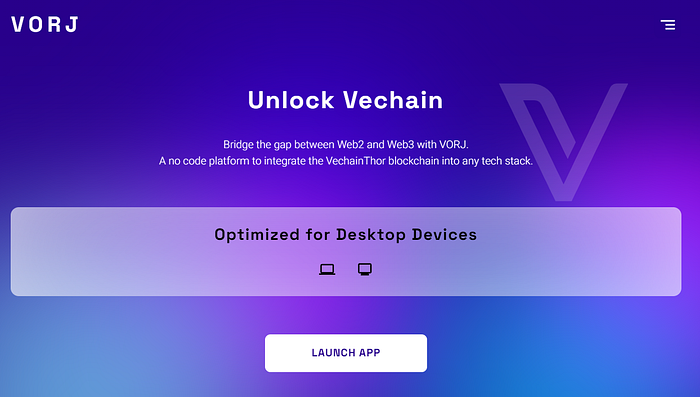
Last update we introduced:

  • IFPS integration for NFTs
  • Tokenized vaults via ERC-4626
  • New ERC-721 NFT creation flows
  • Roles Based Access Controls (RBAC)

And work continues at a rapid pace! Since then we’ve been working on:

World of V Direct NFT Marketplace Integration
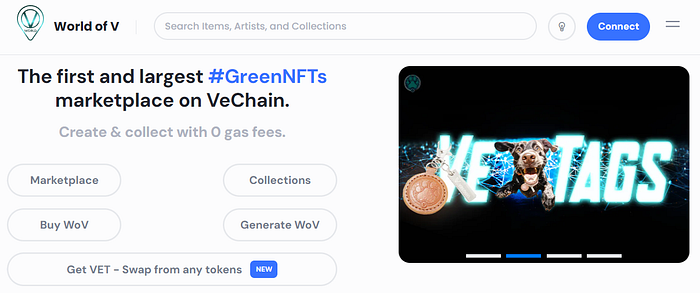
With a direct integration with World of V, a leading marketplace on the VechainThor blockchain, users can now create, deploy, mint and list their collection all through VORJ.

If your marketplace is interested in integrating with VORJ — reach out to our team on Discord!

VORJ Account Limit Upgrades

We’ve increased the free plan limits of VORJ to give users more freedom to create, explore and play with our Web3-as-a-Service toolkits.

One-Click DAO Deployment through VORJ

A new feature that is currently in testing is the ability to create Decentralized Autonomous Organization (DAO) smart contracts through VORJ. This is a monumental step towards an era of autonomy on VechainThor.

This feature opens up endless possibilities for creating decentralized applications and fostering business and community-driven initiatives on our blockchain, with new tokenomics structures and management opportunities opening up as a result.

We’re keeping our Product Lead in the basement to work on this one day and night.

Claimable Extension to ERC-721 (NFT)

Another feature that is currently being tested is extending the NFT contract with an optional claimable event. With this update, we’re allowing VORJ-deployed NFTs to be freely claimable without requiring the contract owner’s permission.

In doing so, business and community ecosystems can create open-ended mint/claim events, making VORJ an ever-more user-friendly and versatile tool for adoption.

Marketplace-as-a-Service (MaaS)

MaaS, our white label marketplace product, aims to simplify how businesses and the community can build and deploy bespoke marketplaces on VechainThor, notably, in relation to our Blockchain Biosphere concept, developed with Boston Consulting Group.

Development continues in earnest, with front-end flows and the back-end dev environment currently under construction.

Wallets

VeWorld Mobile goes live

VeWorld, a core aspect of our new technical infrastructure, went live across App Stores in the past few weeks You can find VeWorld for your preferred device here.

At launch, VeWorld mobile features a more simplified UI, including VET/VTHO price charts, and the ability to change your currency of preference. It includes a native NFT viewer, allowing users to view any collections, rewards or otherwise in one easily-accessible location.

The roadmap for VeWorld is packed, with a fiat gateway with a major global exchange shortly ready to go-live.

In the near future, following community feedback, we’ll also be adding keystore and private key import functions, and providing a VeWorld dAppkit to help projects and users integrate VeWorld with a single line of code. We’re also integrating Ledger support via WalletConnect, ensuring users can manage their funds in their preferred ways.

Other novel features include fee delegation, allowing you to elect a separate address to sponsor transaction fees for you, offering more versatility in how you manage transactions on VechainThor.

Ledger Live Integration
Integrating with Ledger Live not only enhances our current user base experience but opens up vechain assets to an entirely new world of users through Ledger Live itself. All the work is now complete on vechain’s side as our PR has been merged with the Ledger Live repo. With some final QA tests on Ledger’s side being worked on, integration is very close.

We are excited to share that we are also being integrated into Coinify’s trading platform, allowing Ledger Live’s user base to acquire VET tokens directly through the platform via the buy feature. We continue to push ahead with our mission of ensuring the VechainThor blockchain is as open and accessible for as many users as possible.

Developer Ecosystem/Tools

Vechain Docs Revamp
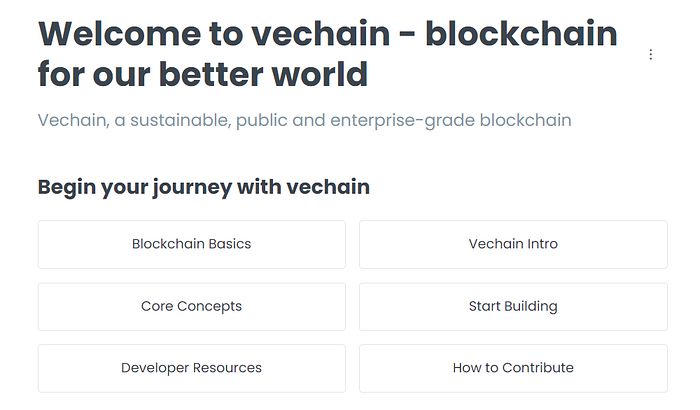
Documentation is the backbone of any blockchain platform’s success. Our commitment to providing comprehensive tutorial documentation is a key to our mission of onboarding the next billion Web2 users to blockchain, necessitating user friendly, simple and intuitive guidance.

We’ve greatly streamlined the documentation user journey, telling the story of blockchain and vechain, before leading developers on to resources, SDKs, grants and more.

Check them out here!

Open-Sourced Documentation

While the Foundation team is growing larger by the month, we intend to welcome contributions from our talented community developers too.

Accordingly, we open sourced our developer documentation, allowing developers from the community to propose changes, or submit new elements themselves.

In-keeping with this theme of invitations from outside the Foundation, we recently launched a $100k community developer Vechain Improvement Proposal (VIP) campaign, as well as a builder-dedicated forum, Discourse.

On Discourse, vechain and community developers can review, comment and collaborate on VIPs and ways to improve the VechainThor protocol.

We continue our commitments towards open-sourcing all areas of VechainThor, actively encouraging contributions with direct incentives for good ideas.

Account Abstraction (EIP 4337)

We’re working to implement Account Abstraction (EIP 4337) on-chain to offer a much greater deal of versatility for builders on VechainThor, and ensure alignment with leading blockchains.

Account abstraction enhances the functionality of existing smart contract wallets, which make blockchain accounts programmable. The name, account abstraction, refers to the logic of removing the signing of transactions from the account and abstracting it out. Smart contract wallets offer a better user experience and improved security. Smart contract wallets are expected to be the approach for normalising and onboarding vast amounts of users from Web2 into Web3.

As always, the technical team continues to evaluate the most promising emerging technologies to incorporate to VechainThor, and provide the most versatile Layer 1 for business and individual use.

Brand New SDK for Seamless Development Environment

A Software Development Kit (SDK) is a core piece of technical infrastructure for any developer looking to develop technical solutions. To streamline our current Thor-DevKit/Connex SDK, we have begun the process of rebuilding it into a more simple and intuitive format.

The new SDK — dubbed simply, the ‘vechain SDK’, will combine Thor-DevKit/Connex, providing examples, tutorials and sample dApps to improve the user experience for developers or businesses building on the VechainThor blockchain.

Simplifying the development process is crucial for attracting more developers to the vechain ecosystem. As our sustainability ecosystem approach scales, these tools will be crucial for independent, seamless development.

New Node Rewards dApp Launches

The testing phase of the Rewards dApp was a great success, and we’ve quietly added the ability to sign in and claim your node rewards!

As well as greatly overhauling the UI, you can now view historical claims, total VTHO generation and other metrics. Looking ahead, we will be integrating a node marketplace directly, and adding the ability to upgrade your nodes from one easy location.

With this new piece of bespoke infrastructure deployed, we gain the option to additional new features and functions in the future relevant for our 2024 technical roadmap.

Building The Future of Web3

A fast-growing team, and a fast-growing technical ecosystem — vechain is gearing up for a full-force assault on bridging the Web2 to our Web3 ecosystem.

As always, our focus on innovative, user-friendly and simplistic, blockchain-abstracting tools remains at the core of everything we build; an approach that continues to bare fruit.

With the world turning to blockchain at an increasing pace, we’re excited knowing our battle-tested technologies and platform remain firmly as a forerunner. We hope you’re enjoying watching our journey unfold — there’s plenty more to come!

About vechain

Vechain, headquartered in San Marino, Europe, is the curator of VechainThor, a world leading smart contract platform spearheading the real world adoption of blockchain technology.

Through leveraging the capabilities of ‘trustless’ data (information without intermediaries), smart contracts and IoT technologies, VechainThor has enabled solutions across a wide array of fields. Vechain now turns its attention to the greatest challenge of all — building digital ecosystems to drive sustainability and digital transformation at global scale.

Visit vechain.org to learn more

Link

 Your support means the world to me, and I invite you to consider making a donation or becoming a dedicated supporter of this project. Any amount of XRP donations can be sent by scanning the QR code below and are greatly appreciated. ~ Namaste' 🙏🏼The Dinarian




community logo
Join the TheDinarian Community
To read more articles like this, sign up and join my community today
0
What else you may like…
Videos
Podcasts
Posts
Articles
Innovators can finally come home and BUILD, INVEST and HIRE in America 🇺🇸

Americans deserve safe U.S. markets as an alternative to offshore platforms. Now you can trade spot crypto on @CFTC registered exchanges. Innovators can finally come home and BUILD, INVEST and HIRE in America 🇺🇸

December 04, 2025

WASHINGTON – Commodity Futures Trading Commission Acting Chairman Caroline D. Pham today announced that listed spot cryptocurrency products will begin trading for the first time in U.S. federally regulated markets on CFTC registered futures exchanges. The announcement marks a significant step forward in the Trump Administration’s pledge to usher in a Golden Age of Innovation and make America the “crypto capital of the world.”

“The CFTC has a rich history of welcoming responsible innovation on futures exchanges by balancing regulatory flexibility with core principles that safeguard both institutional and retail traders. Thanks to President Trump’s leadership, this Administration has developed a comprehensive all-of-government plan for America to reclaim...

00:01:35
Don’t forget who you are up against: The Bankers

They move with patience that most retail investors never see. They make decisions long before the public understands what is happening.

This is why firms like Vanguard and BlackRock operate in silence behind the scenes. Retail only hears about their crypto moves once they are already in position.

Do not mistake their silence for stagnation.

While retail is fed fear, noise, and volatility headlines, institutional players are quietly preparing for the next shift.

They are accumulating.
They are aligning.
They are shaping what comes next.

The stakes are real, but you are not powerless, study how Smart Money thinks.

If you understand their mindset and the way they approach the market, you give yourself a real chance to rise above the distractions and move with purpose in an environment designed to confuse you.

00:02:20
🚨SEC Chair Paul Atkins: 🇺🇸“All U.S. markets will be on chain within two years.”
00:03:06
👉 Coinbase just launched an AI agent for Crypto Trading

Custom AI assistants that print money in your sleep? 🔜

The future of Crypto x AI is about to go crazy.

👉 Here’s what you need to know:

💠 'Based Agent' enables creation of custom AI agents
💠 Users set up personalized agents in < 3 minutes
💠 Equipped w/ crypto wallet and on-chain functions
💠 Capable of completing trades, swaps, and staking
💠 Integrates with Coinbase’s SDK, OpenAI, & Replit

👉 What this means for the future of Crypto:

1. Open Access: Democratized access to advanced trading
2. Automated Txns: Complex trades + streamlined on-chain activity
3. AI Dominance: Est ~80% of crypto 👉txns done by AI agents by 2025

🚨 I personally wouldn't bet against Brian Armstrong and Jesse Pollak.

👉 Coinbase just launched an AI agent for Crypto Trading

CONNECTION BETWEEN RIPPLE, mCBDC BRIDGE PLATFORM, BLOCKCHAIN BASED SDR: 👇

The mCBDC bridge platform can be maintained by liquidity pools on Ripple’s On-Demand Liquidity Platform using ISO 20022 as the common standard.

mCBDC Bridge —> Leverage CBDCs using SDR for settlement.🔑

Op: Smqkedqg

Western Union to launch a crypto card preloaded with USD stablecoins. The card will allow users to store money in stablecoins, keeping their savings’ value even if local currency drops from inflation.

post photo preview

🚨 LEGACY BILLING SYSTEMS BLEED BANKS FOR MILLIONS 🚨

Out-of-date invoicing platforms are quietly slicing tens of millions off annual net income at U.S. regional banks, according to a PYMNTS study of 25 mid-tier lenders. Patch-worked spreadsheets, manual PDF reviews and paper checks are stretching revenue-recognition cycles to 45+ days and driving write-offs of up to 3 % of fee income—losses that could be eliminated with modern, API-driven billing engines.

🔑 Key Points

🔹 Revenue Leakage: Average $23 B-asset bank forgoes $9.4 M per year through missed interchange splits, unbilled treasury-management fees and waivers granted because “the system can’t calculate it correctly.”

🔹 Manual Chaos: 62 % of respondents still reconcile commercial-card earnings in Excel; 38 % print e-invoices, stamp them “paid,” then re-scan to PDF for auditors—adding $11 in cost per invoice.

🔹 Customer Fallout: 28 % of corporate clients received at least one “mystery fee” reversal in ...

post photo preview
XDC Network's acquisition of Contour Network

XDC Network's acquisition of Contour Network marks a silent shift to connect the digital trade infrastructure to real-time, tokenized settlement rails.

In a world where cross-border payments still take days and trap trillions in idle liquidity, integrating Contour’s trade workflows with XDC Network Blockchains' ISO 20022 financial messaging standard to bridge TradFi and Web3 in Trade Finance.

The Current State of Cross-Border Trade Settlements

Cross-border payments remain one of the most inefficient parts of global finance. For decades, companies have inter-dependency with banks and their correspondent banks across the world, forcing them to maintain trillions of dollars in pre-funded nostro and vostro balances — the capital that sits idle while transactions crawl across borders.

Traditional settlement is slow, often 1–5 days, and often with ~2-3% in FX and conversion fees. For every hour a corporation can’t access its own cash increases the cost of financing, tightens liquidity that could be used for other purposes, which in turn slows economic activity.

Before SWIFT, payments were fully manual. Intermediary banks maintained ledgers, and reconciliation across multiple institutions limited speed and volume.

SWIFT reshaped global payments by introducing a secure, standardized messaging infrastructure through ISO 20022 - which quickly became the language of money for 11,000+ institutions in 200 countries.

But SWIFT only fixed the messaging — not the movement. Actual value still moves through slow, capital-intensive correspondent chains.

Regulated and Compliant Stablecoin such as USDC (Circle) solves the part SWIFT never could: instant, on-chain settlement.

Stablecoin Settlement revamping Trade and Tokenization

Stablecoin such as USDC is a digital token pegged to the US Dollar, still the most widely used currency for trade, enabling the movement of funds instantly 24*7 globally - transparently, instantly, and without the need for any intermediaries and the need to lock in trillions of dollars of idle cash.

Tokenized settlement replaces multi-day reconciliation with on-chain finality, reducing:

  • Dependency on intermediaries
  • Operational friction
  • Trillions locked in idle liquidity

For corporates trapped in long working capital cycles, this is transformative.

Digital dollars like USDC make the process simple:

Fiat → Stablecoin → On-Chain Transfer → Fiat

This hybrid model is already widely used across remittances, payouts, and treasury flows.

But one critical piece of global commerce is still lagging:

👉 Trade finance.

The Missing link is still Trade Finance Infrastructure.

While payments innovation has raced ahead, trade finance infrastructure hasn’t kept up. Document flows, letters of credit, and supply-chain financing remain siloed, paper-heavy, and operationally outdated.

This is exactly where the next breakthrough will happen - and why the recent XDC Network acquisition of Contour is a silent revolution.

It transforms to a new era of trade-driven liquidity through an end-to-end digital trade from shipping docs to payment confirmation – one infrastructure that powers all.

The breakthrough won’t come from payments alone — it will come from connecting trade finance to real-time settlement rails.

The XDC + Contour Shift: A Silent Revolution

  • Contour already connects global banks and corporates through digital LCs and digitized trade workflows.
  • XDC Blockchain brings a settlement layer built for speed, tokenization, and institutional-grade interoperability and ISO 20022 messaging compatibility

Contour’s digital letter of credit workflows will be integrated with XDC’s blockchain network to streamline trade documentation and settlement.

Together, they form the first end-to-end digital trade finance network linking:

Documentation → Validation → Settlement all under a single infrastructure.

XDC Ventures (XVC.TECH) is launching a Stable-Coin Lab to work with financial institutions on regulated stablecoin pilots for trade to deepen institutional trade-finance integration through launch of pilots with banks and corporates for regulated stable-coin issuance and settlement.

The Bottom Line

Payments alone won’t transform Global Trade Finance — Trade finance + Tokenized Settlement will.

This is the shift happening underway XDC Network's acquisition of Contour is the quiet catalyst.

Learn how trade finance is being revolutionised:

https://www.reuters.com/press-releases/xdc-ventures-acquires-contour-network-launches-stablecoin-lab-trade-finance-2025-10-22/

Source

🙏 Donations Accepted, Thank You For Your Support 🙏

If you find value in my content, consider showing your support via:

💳 Stripe:
1) or visit http://thedinarian.locals.com/donate

💳 PayPal
2) Simply scan the QR code below 📲 or Click Here

🔗 Crypto Donations Graciously Accepted👇
XRP: r9pid4yrQgs6XSFWhMZ8NkxW3gkydWNyQX
XLM: GDMJF2OCHN3NNNX4T4F6POPBTXK23GTNSNQWUMIVKESTHMQM7XDYAIZT
XDC: xdcc2C02203C4f91375889d7AfADB09E207Edf809A6


Read full Article
post photo preview
Inside The Deal That Made Polymarket’s Founder One Of The Youngest Billionaires On Earth🌍

One year ago, the FBI raided Polymarket founder Shayne Coplan’s apartment. Now, the college dropout is a billionaire at age 27.

In July, Jeffrey Sprecher, the 70-year-old billionaire CEO of Intercontinental Exchange, the parent company of the New York Stock Exchange, sat at Manhatta, an upscale restaurant in the financial district overlooking the sprawling New York City skyline from the 60th floor. As a sommelier weaved through tables pouring wine, in walked Shayne Coplan—in a T-shirt and jeans, clutching a plastic water bottle and a paper bag with a bagel he’d picked up en route. Sprecher chuckles as he recalls his first impression of the boyish, eccentric entrepreneur: “An old bald guy that works at the New York Stock Exchange, where we require that you wear a suit and tie, next to a mop-headed guy in a T-shirt that's 27.” But Sprecher was fascinated by Polymarket, Coplan’s blockchain-based prediction market, and after dinner, he made his move: “I asked Shayne if he would consider selling us his company.”

Prediction markets like Polymarket let thousands of ordinary people bet on future events—the unemployment rate, say, or when BitCoin will hit an all-time high. In aggregate, prediction market bets have proven to be something of a crystal ball with the wisdom of the crowd often proving itself more prescient than expert opinion. For instance, Polymarket punters predicted that Trump would prevail in the 2024 presidential election, when many national pundits were sure that Kamala Harris would win.

Coplan initially turned down Sprecher’s buyout offer. But discussions led to negotiations and eventually a deal. In October, Intercontinental announced it had invested $2 billion for an up to 25% stake in the company, bringing the young solo founder the balance he was looking for. “We're consumer, we’re viral, we're culture. They’re finance, they’re headless and they’re infrastructure,” Coplan tells Forbes in a recent interview.

At the same time, Coplan announced investments from other billionaires including Figma’s Dylan Field, Zynga’s Mark Pincus, Uber’s Travis Kalanick and hedge fund manager Glenn Dubin. A longtime Red Hot Chili Peppers fan, Coplan even convinced lead singer Anthony Kiedis to invest after a mutual acquaintance brought the musician to Coplan’s apartment one day. “He's buzzing my door, and I’m like, ‘holy shit,'” Coplan recalls, his bright blue eyes widening. “I love their music. A lot of the inspiration [for my work] comes from the music that I listen to.”

Thanks to the deals, Polymarket’s valuation quickly shot to $9 billion, making the 2025 Under 30 alum the world’s youngest self-made billionaire, with an estimated 11% stake worth $1 billion. His reign was short: twenty days later, he was overtaken as the youngest by the three 22-year-old founders of AI startup Mercor.

Young entrepreneurs are minting ten-figure fortunes faster than ever. In addition to the Mercor trio and Coplan, 15 other Under 30 alumni—including ScaleAI cofounder Lucy Guo, Reddit’s Steve Huffman and Cursor’s cofounders—became billionaires this year, while Guo’s cofounder Alexandr Wang and Robinhood’s Vlad Tenev (both former Under 30 honorees) regained their billionaire status after having fallen out of the ranks.

The budding billionaire has long been fascinated by markets and tech. When he was just 14, Coplan emailed the regional Securities and Exchange Commission office to ask how to create new marketplaces. “I did not get a response, but it’s a really funny email,” he says, grinning playfully as he thinks of his younger self. “It just shows that this stuff takes over a decade of percolating in your mind.”

Two years later, Coplan showed up at the offices of internet startup Genius uninvited after multiple emails of his asking for an internship went ignored. At age 16—at least a decade younger than anyone in that office—he secured his first job after making a memorable impression with his “wild curls” and “encyclopedic knowledge of billionaire tech entrepreneurs.” “If he chooses to become a tech entrepreneur, which seems likely, I have no doubt that we’ll be seeing his name again in the press before long,” Chris Glazek, his manager at the time, wrote in Coplan’s college recommendation letter.

Coplan went on to study computer science at NYU, but dropped out in 2017 to work on various crypto projects that never took off. In 2020, he founded Polymarket to create a solution to the “rampant misinformation” he saw in the world: The company’s first market allowed users to bet on when New York City would reopen amid the pandemic. He soon expanded into elections and pop culture happenings, among other events.

But it didn’t take long for the company to butt heads with regulators. In January 2022, Polymarket paid a $1.4 million fine to the Commodity Futures Trading Commission for offering unregistered markets. It was also ordered to block all U.S. users, but activity on Polymarket skyrocketed particularly during the 2024 U.S. presidential election, with bets totaling $3.6 billion. A week after the election, the FBI raided Coplan's apartment and seized his devices as part of an investigation into a possible violation of this agreement. Shortly after, Coplan posted on his X account that he saw the raid as “a last-ditch effort” from the Biden administration “to go after companies they deem to be associated with political opponents.”

In July, the Department of Justice and CFTC dropped the investigations—after which Sprecher reached out to Coplan for dinner—and less than a week later, Polymarket announced it had acquired CFTC-licensed derivatives exchange QCX to prepare for a compliant U.S. launch. QCX applied to be a federally-registered exchange in 2022—an application that was left dormant for three years before receiving approval less than two weeks before the acquisition was announced. When asked about the timing of the deal, Coplan points to CFTC acting chairwoman Caroline Pham, who President Trump tapped to lead the agency in January. “Caroline deserves a lot of credit for getting every single license that had been paused for no reason approved, as acting chairwoman in less than a year,” he says. Coplan had realized an acquisition might be the only way for Polymarket to legally operate in the U.S. as early as 2021 due to the lengthy federal approval process, a source familiar with the deal told Forbes.

Just two months after the acquisition and days after Donald Trump Jr. joined Polymarket’s advisory board, the company received federal approval to launch in the U.S. (Trump Jr. has also served as a strategic advisor to Polymarket’s main competitor Kalshi since January.)

Polymarket’s rapid rise has drawn critics. Dennis Kelleher, co-founder and CEO of Washington-based financial advocacy group Better Markets, told Forbes in an email that the current administration’s deregulation around prediction markets has unlocked a regulatory “loophole” to enable “unregulated gambling” under the CFTC, “which has zero expertise, capacity or resources to regulate and police these markets.” Kelleher added that with backing from the Trump family “who are directly trying to profit on this new gambling den… the massive deregulation and crypto hysteria will almost certainly end badly for the American people.”

Investors and businesses are scrambling to seize the moment of deregulation. “We had opportunities to invest in events markets earlier, but there was a lot of risk,” Sprecher says, listing the regulatory changes in favor of crypto and prediction markets under the current administration. “This was the moment to invest if we wanted to still be early in the space.”

In the last few months, Trump’s Truth Social and sportsbook FanDuel, as well as cryptocurrency exchanges Crypto.com, Coinbase and Gemini all announced their own plans to offer prediction markets. Robinhood CEO Vlad Tenev said prediction markets, which were integrated into its platform in March, were helping drive record activity for the retail brokerage in its third quarter earnings call.

“People are starting to realize right now that the opportunities are endless,” says Dubin, the billionaire hedge fund veteran who invested in Polymarket earlier this year. He points to sports betting companies, which have been regulated by states as gambling activity and taxed accordingly. States like New York can tax up to 51% of sportsbooks’ revenue, but federally-regulated prediction markets can bypass state laws, avoiding taxes and operating in all 50 states. With the realization that prediction markets could upend the sports betting industry—which brought in $13.7 billion in revenue in 2024—businesses are quickly jumping on board despite pushback from state gambling regulators. In October, both Polymarket and Kalshi secured partnerships with sportsbook PrizePicks and the National Hockey League, and Polymarket announced exclusive partnerships with sportsbook DraftKings and the Ultimate Fighting Championship.

The disruption won’t be limited to sports betting. Alongside its investment, Intercontinental’s tens of thousands of institutional clients including large hedge funds and over 750 third-party providers of data will soon have access to Polymarket data, as it gets integrated into Intercontinental’s products such as indices to better inform investment decisions. It also hopes to work with Polymarket to work on initiatives around tokenization—or converting financial assets into digital tokens on blockchain technology—to allow traders on Intercontinental’s exchanges to trade more flexibly at all hours of the day, Sprecher says. What’s more, in November, Google Finance announced it would integrate Polymarket and Kalshi data into its search results, while Yahoo Finance also announced an exclusive partnership with Polymarket.

Despite flashy investors, partnerships and a record $2.4 billion of trading volume in November, Polymarket has yet to launch in the U.S. or turn a profit. Coplan and his investors have hinted at ways the company could make money one day—selling its data, charging fees to users, launching a cryptocurrency token (similar to Ethereum or Bitcoin)—but decline to confirm any specifics. For now, the only thing that’s certain is the bet Coplan is making on himself. “Going for it and having it not pan out is an infinitely better outcome than living your life as a what if,” he says.

Standing across from the New York Stock Exchange building, Coplan tilts his head up as he watches a massive banner with Polymarket’s logo get hoisted onto the exterior of the building. It’s been five years since founding. One year since the FBI raid. He’s taking it all in. “Against all odds,” the bright blue banner reads, rippling in the wind alongside three American flags protruding from the building.

Source

🙏 Donations Accepted 🙏

If you find value in my content, consider showing your support via:

💳 Stripe:
1) or visit http://thedinarian.locals.com/donate

💳 PayPal
2) Simply scan the QR code below 📲 or Click Here

🔗 Crypto Donations Graciously👇
XRP: r9pid4yrQgs6XSFWhMZ8NkxW3gkydWNyQX
XLM: GDMJF2OCHN3NNNX4T4F6POPBTXK23GTNSNQWUMIVKESTHMQM7XDYAIZT
XDC: xdcc2C02203C4f91375889d7AfADB09E207Edf809A6

Read full Article
post photo preview
Epstein-Linked Emails Expose Funding Ties to Bitcoin Core Development — Here Is What the Documents Reveal
  • Newly released emails show Jeffrey Epstein helped fund MIT’s Digital Currency Initiative, which supported Bitcoin Core development.
  • The documents also confirm that Leon Black donated to MIT’s Media Lab through Epstein-directed channels.
  • The revelations reshape part of Bitcoin’s early institutional funding history and highlight long-hidden influence from controversial donors.

Newly unsealed emails from the House Oversight Committee have shed fresh light on Jeffrey Epstein’s hidden financial influence inside MIT’s Media Lab — and more importantly, how some of that money flowed into Bitcoin Core development. The correspondence reveals that Joichi Ito, then-director of the MIT Media Lab, relied on Epstein-connected “gift funds” to rapidly launch the Digital Currency Initiative (DCI) in 2015, the research hub that became one of the primary sources of funding for Bitcoin’s core developers.

Emails Show Epstein-Connected Money Helped Launch MIT’s Digital Currency Initiative

In the newly surfaced emails, Ito directly thanked Epstein for the financial help that allowed MIT to “move quickly and win this round,” referring to the formation of DCI — a program explicitly designed to provide long-term support for Bitcoin Core contributors after the collapse of the Bitcoin Foundation. Ito’s forwarded message to Epstein described how the foundation’s implosion left core developers without stable funding, creating an opening for MIT to bring them under its umbrella.

He explained that three major developers — including Wladimir van der Laan and Cory Fields — agreed to join MIT, calling it “a big win for us.” The email also highlighted early support from prominent academics, including cryptographer Ron Rivest and IMF economist Simon Johnson. Epstein simply replied: “gavin is clever.”

Funding Numbers Reveal a Much Larger Financial Trail

MIT publicly claimed that Epstein donated $850,000 to the institution, with $525,000 flowing to the Media Lab. But journalist Ronan Farrow later reported the true figure was closer to $7.5 million — including a $5 million anonymous donation connected to Epstein associate Leon Black. The new emails appear to confirm that Black not only donated, but did so through Epstein’s direction.

One email from Ito to Epstein reads: “We were able to keep the Leon Black money, but the $25K from your foundation is getting bounced by MIT back to ASU.”


Epstein responded: “No problem — trying to get more black for you.”

The documents reveal Epstein’s influence reached deeper into Bitcoin circles than previously acknowledged, even including early conversations with Brock Pierce — another figure with documented ties to both Epstein and controversy surrounding early crypto foundations.

MIT’s Internal Concerns and the Fallout

The emails also expose MIT’s internal unease around anonymous or reputationally risky donations. After the scandal broke, Ito resigned in 2019. MIT later tightened donation policies, warning that “everything becomes public” eventually — a statement that now seems prophetic given this week’s disclosures.

Developers like Wladimir van der Laan say they were unaware of the extent of Epstein’s involvement and noted that DCI’s funding transparency “was not great back in the day.” The Media Lab and DCI declined to comment.

Source

🙏 Donations Accepted 🙏

If you find value in my content, consider showing your support via:

💳 Stripe:
1) or visit http://thedinarian.locals.com/donate

💳 PayPal
2) Simply scan the QR code below 📲 or visit HERE

🔗 Crypto Donations👇
XRP: r9pid4yrQgs6XSFWhMZ8NkxW3gkydWNyQX
XLM: GDMJF2OCHN3NNNX4T4F6POPBTXK23GTNSNQWUMIVKESTHMQM7XDYAIZT
XDC: xdcc2C02203C4f91375889d7AfADB09E207Edf809A6

Read full Article
See More
Available on mobile and TV devices
google store google store app store app store
google store google store app tv store app tv store amazon store amazon store roku store roku store
Powered by Locals