TheDinarian
News • Business • Investing & Finance
šŸŽ VeChain x B.R.E.W 2022 — Dimitris Neocleous Leads VeChain Adoption in Cyprus šŸŽ
December 25, 2022
post photo preview

Last week, Dimitris Neocleous, the VeChain Foundation’s Head of Ecosystem Build, attended B.R.E.W 2022 alongside high profile participants.

While there, he presented multiple sessions covering VeChain’s technology & sustainability roadmaps and updates on applications of VeChain’s blockchain technology within the healthcare space.

The VeChain focus was not limited to Dimitris’ sessions, however, with many interesting updates and developments relating to VeChain’s partners. Below, we share a recap of key information and highlights from the event.

VeChain x Technology and Sustainability Roadmap
1*SJub7ztIvIfctOuQFH6I0A.png

During B.R.E.W 2022, Dimitris gave a presentation on VeChain’s roadmap through 2023. Following the opening of the Foundation’s new Technology Centre in Dublin, Ireland, the developmental cadence has increased considerably. With more hands on deck, more initiatives can be worked on in parallel.

Dimitris shared updates on the current technical and sustainability roadmap, which can be broadly split into sustainability-related tools, developer tools and ā€˜digital ecosystem’ tools.

0*2T6qScx5KzNL1mra
Our digital ecosystems have been in development for some time. Since 2018, following the introduction of the ā€˜Digital Low Carbon Ecosystem’ we’ve been working towards a goal of delivering mass-scale digital ecosystems that reward and incentivise participation by businesses and publics, and leverage the power of trustless data to create transparency and trust.

At Messari Mainnet 2022, it was revealed that VeChain will be launching a new whitepaper with a focus on sustainable digital ecosystems in Q1 of 2023. Digital ecosystems have proven particularly compelling for businesses, enterprises and governments who see immense value in them. Discussions during ATP and other recent events have demonstrated this clearly.

Dimitris also unveiled extensive upgrades to many aspects of VeChain’s technology stack, in pursuit of its mission of becoming the most versatile and real-world ready public blockchain in the industry, while also empowering community developers and users new and old, too.

Our new wallet will play a key role in this future, providing a slick, easy onboarding experience for newcomers to the ecosystem.

Dimitris shared details about the wallet, coming in web wallet (think ā€˜MetaMask’ for VeChain), mobile and desktop application form. It will contain many new features, including a carbon calculator, fiat on/off ramps, DeFi, a new dApp store and much more. The wallet will have a dedicated team, making regular quality of life updates and upgrades.

VeChain x Healthcare Applications

0*Dxh_Lm1NsW5ow2hk

Another topic covered by Dimitris was ongoing developments in the field of healthcare. To date, VeChain has gained considerable experience in this sector, developing projects in areas ranging from IVF to oncology, lab test results and clinical trial drug traceability systems. All abiding by data protection regulations and, in Europe, GDPR compliant.

In the session, Dimitris shared updates aboutĀ e-hcert, a medical application first announced in 2020 and currently being used by two private hospitals in Cyprus. Following two years of use, the freely application has demonstrated its efficacy in a real world hospital setting.
0*KawsZUztQcfjFGnb

B.R.E.W 2022 — Plentiful Discussion Around VeChain Application

In addition to Dimitris’ own presentations, other participants shared projects being built on VeChainThor. One such project was Decent HS.

0*5S12yu1DeSZ1Z0Ot

Decent HS unveiled its health and safety focused platform utilising VeChainThor to digitise the assets of a company within a given plot or building.

By doing so, auditors gain access to instantly verifiable trails of data to ensure the validity and safety of various inspection data, while businesses can demonstrate regulatory compliance far more quickly and efficiently.

Decent HS are building their platform to advance the 8th UN Sustainable Development Goal of ā€˜decent work and economic growth’, ensuring safe and proper working conditions, leveraging the power of new digital technologies.

Grant Thornton Cyprus, whoĀ announced their partnershipĀ with VeChain in 2020 and laterĀ unveiled themselves as an authority node, is collaborating and helping to provide auditing services for the firm, building a compliant and sustainable digitised Health and Safety ecosystem on the VeChainThor blockchain.

Invest Cyprus

During a workshop, Dimitris met Marios Tannousis, Deputy Director of Invest Cyprus, the national investment partner of the Republic of Cyprus. The organisation helps guide the government in relation to investment areas and furthers Cyprus’ capabilities as a nation by helping it stay ahead of emerging global trends.

VeChain, CREAM LLC. and Invest CyprusĀ signed an MOU in 2018, and, at the event, Dimitris and Marios discussed advancing the exclusive and highly beneficial relationship further.

Electi

Dimitris also had the chance to meet with the Electi team during the event. Electi announced their partnership with VeChain in aĀ LinkedIn postĀ in September 2022.

Their team specialise in development and are helping VeChain build new smart contract capabilities and technical features, including new tools and developer libraries, part of VeChain’s mission to make building on blockchain incredibly simple and powerful.

Deforestation Prevention Using NFT Technology

An exciting and innovative use case in development also came to light during the event — using VeChainThor to combat deforestation.

By combining IoT, NFT and blockchain technology, this team are creating ā€˜digital twins’ for trees — a digital counterpart that can monitor and track changes in real time, allowing for rapid response to illegal activity.

These kinds of technologies promise powerful tools for areas of the world where illegal deforestation is having catastrophic consequences on biodiversity, such as the Amazon rainforest.

An exciting technical showcase

Attending events such as these represent important networking opportunities for VeChain. The Foundation’s ā€˜digital ecosystem’ approach and real-world tested tools continue to gain traction among governments, companies and project teams of all sizes.

What’s more, as VeChain’s technical tools advance and the general understanding of blockchain technology improves, third parties are building and deploying their own solutions independently, marking an important turning point for mass adoption. The technical tools the Foundation will deliver in 2023 will only accelerate this pace further.

The VeChain Foundation prides itself on proactively leading these discussions and being a key player in advancing real world adoption of blockchain technology. The Foundation’s focus on compliance, relationships with leading global consultants such as DNV and proven real-world capabilities position it as the only realistic choice for companies and organisations seriously looking to build real world applications.

The VeChain Foundation remains supremely confident of its position in this new, blockchain-ised world, and looks forward to the many exciting initiatives and developments to come in 2023.

About The VeChain Foundation

The VeChain Foundation, headquartered in San Marino, Europe, is the non-profit organisation behind the development of VeChainThor, a world leading smart contract platform spearheading the real world adoption of blockchain technology.

By leveraging the capabilities of ā€˜trustless’ data (information without intermediaries), smart contracts and IoT technologies, VeChainThor has delivered solutions in a wide array of fields, and now turns its attention to arguably the greatest challenge of all — building technologies and ecosystems to drive true sustainability and digital transformation at global scale.


Link

community logo
Join the TheDinarian Community
To read more articles like this, sign up and join my community today
0
What else you may like…
Videos
Podcasts
Posts
Articles
šŸ¤– AI Won't Destroy Jobs—It Will Create a Labor Shortage! šŸ“‰

While most headlines focus on AI-driven displacement, Groq Founder and CEO Jonathan Ross offers a fascinating, contrarian perspective. He argues that instead of mass unemployment, we are heading toward a massive labor shortage driven by three tectonic shifts:

1. Massive Deflationary Pressure: Efficiency gains from automated farming, robotics, and streamlined supply chains will drive down the cost of everyday essentials—from coffee to housing—meaning people will ultimately need less money to thrive. ā˜•ļøšŸ 

2. The Great Economic Opt-Out: As living costs drop and productivity skyrockets, humans will choose to work fewer hours, fewer days a week, and retire much earlier because their lifestyles will be easier to support. ā³šŸŒ“

3. Unimaginable New Industries: Just as agriculture dropped from 98% of the US workforce a century ago to just 2%—paving the way for entirely new careers like software development and content creation—tomorrow's jobs are literally ...

00:02:00
šŸ”µ The most important shape nobody talks about šŸ”µ

Heinz Hopf discovered this in 1931. Roger Penrose called it "an element of the architecture of our world.' Eric Weinstein brought it up on Joe Rogan - and the silence in the room said everything.
The Hopf fibration maps a 4D hypersphere onto a regular sphere using circles that never intersect but each links through every other exactly once. It shows up in at least 8 areas of physics - including the Bloch sphere geometry that every qubit in a quantum computer lives on.

00:09:42
🌐 Institutional Access Meets Dcentralized AI! šŸ¤–šŸ“ˆ

The bridge between traditional capital markets and the decentralized AI economy is expanding. Through investment vehicles like the Grayscale Bittensor Trust ($GTAO), traditional market participants gain regulated exposure to the native asset powering decentralized machine learning.

No wallet setups, no complex custody hurdles—just direct tracking of the infrastructure driving open-source intelligence.šŸ‘‡

00:05:18
🚨 Chutes is being framed as a Hyperliquid-style breakout for decentralized AI inference, with live revenue, verified GPU infrastructure, and a direct challenge to centralized cloud AI 🚨

Chutes is gaining attention as a decentralized AI inference platform that claims to combine real usage, cryptographic verification, confidential computing, and open-source infrastructure into a working production system. The thesis is simple: instead of trusting Big Tech clouds with AI workloads, users get a distributed compute layer built around verification and privacy.

šŸ”‘ Key points

šŸ”¹ Chutes is live in production and reportedly scaled to more than 1,170 active GPU nodes, including large numbers of Nvidia H200s and Blackwell-class hardware.

šŸ”¹ The platform says it has processed nearly 38 trillion tokens since launch across 53 deployed applications and more than 700,000 registered users.

šŸ”¹ The team reportedly cut unprofitable usage programs, reduced total token volume, and still improved revenue efficiency, with revenue per GPU rising sharply after removing subsidized traffic.

šŸ”¹ Chutes is using post-quantum cryptography, trusted execution environments, and Nvidia confidential ...

🚨 Chutes is being framed as a Hyperliquid-style breakout for decentralized AI inference, with live revenue, verified GPU infrastructure, and a direct challenge to centralized cloud AI 🚨
🚨 JPMorgan’s criticism of the CLARITY Act is fueling a fresh power struggle over who gets to write America’s crypto rules 🚨

A new clash is emerging between legacy finance and crypto legislation after JPMorgan CEO Jamie Dimon reportedly warned that the CLARITY Act could let crypto firms offer bank-like products without bank-level oversight. The dispute is quickly turning into a larger fight over regulation, competitiveness, and who controls the future architecture of digital finance in the United States.

šŸ”‘ Key points

šŸ”¹ Jamie Dimon reportedly called the CLARITY Act a threat to the financial system, arguing it could allow crypto firms to offer yield-like products while avoiding the capital, reserve, and oversight burdens traditional banks face.

šŸ”¹ Senator Cynthia Lummis pushed back publicly, framing the issue as a global strategic race and warning that if the U.S. does not set digital asset standards, other powers will.

šŸ”¹ The core tension is whether the bill creates legitimate regulatory clarity or simply opens the door to regulatory arbitrage for crypto platforms operating outside the traditional banking...

🚨 JPMorgan’s criticism of the CLARITY Act is fueling a fresh power struggle over who gets to write America’s crypto rules 🚨
šŸ‘‰ Coinbase just launched an AI agent for Crypto Trading

Custom AI assistants that print money in your sleep? šŸ”œ

The future of Crypto x AI is about to go crazy.

šŸ‘‰ Here’s what you need to know:

šŸ’  'Based Agent' enables creation of custom AI agents
šŸ’  Users set up personalized agents in < 3 minutes
šŸ’  Equipped w/ crypto wallet and on-chain functions
šŸ’  Capable of completing trades, swaps, and staking
šŸ’  Integrates with Coinbase’s SDK, OpenAI, & Replit

šŸ‘‰ What this means for the future of Crypto:

1. Open Access: Democratized access to advanced trading
2. Automated Txns: Complex trades + streamlined on-chain activity
3. AI Dominance: Est ~80% of crypto šŸ‘‰txns done by AI agents by 2025

🚨 I personally wouldn't bet against Brian Armstrong and Jesse Pollak.

šŸ‘‰ Coinbase just launched an AI agent for Crypto Trading

šŸš€ ZEC reaches an eight-year high as analysts ask whether TAO could be next šŸš€

Zcash has surged to approximately $856, reaching its highest level in eight years and reviving interest in older crypto assets with strong narratives, limited supply, and renewed market demand.

šŸ”‘ Key points

šŸ”¹ ZEC broke higher: The token’s move to approximately $856 represents a major recovery from its multi-year lows.

šŸ”¹ Privacy is back in focus: Renewed concerns around surveillance, financial censorship, and transaction privacy have strengthened interest in privacy-focused assets.

šŸ”¹ Limited supply supports the narrative: Zcash’s capped supply gives traders a scarcity-based investment thesis similar to Bitcoin.

šŸ”¹ Momentum is attracting attention: Large price increases can draw new capital, increase liquidity, and create a self-reinforcing cycle.

šŸ”¹ TAO is being compared with ZEC: Bittensor’s token could benefit from a similar rotation if the market begins rewarding decentralized AI infrastructure.

šŸ”¹ TAO ...

šŸ“œ IT’S TIME TO REWRITE THE HISTORY BOOKS! 🚨

A discovery in Oregon is forcing researchers to completely rethink the timeline of human existence in North America! šŸ‡ŗšŸ‡ø

Ancient evidence dating back roughly 130,000 years is raising massive questions about when humans first stepped foot on the continent—and how early populations managed to survive during the height of the Ice Age. 🧊

For decades, mainstream archaeology held tight to traditional migration models. But as new evidence, ancient tool technology, and fossilized footprints surface, that timeline is shattering. šŸ”ØāœØ

šŸ” What Makes the Oregon Discovery So Significant?

🦓 Pushing Back the Timeline: Evidence from Pacific Northwest sites suggests human presence thousands of years earlier than previously accepted by traditional consensus.

šŸ”ļø Ice Age Resilience: Prehistoric communities were navigating, hunting, and thriving in rugged, sub-zero environments far earlier than thought possible.

🧭 New Migration Routes: The ...

šŸ“ˆ Mantis (SN123) grows a $500,000 prop-trading account ahead of October launch šŸ“ˆ

Mantis (SN123) is building a trading-intelligence subnet around a simulated prop-trading account that has reportedly grown to $500,000 ahead of its planned October expansion.

šŸ”‘ Key points

šŸ”¹ Prop-trading model: Mantis evaluates trading agents based on risk-adjusted performance rather than simple prediction accuracy.

šŸ”¹ $500,000 account milestone: The account reportedly reached the half-million-dollar level during testing.

šŸ”¹ Risk controls are central: Agents must manage position sizing, drawdowns, leverage, and exposure instead of maximizing short-term returns.

šŸ”¹ Multiple strategies compete: Miners can submit different approaches to market analysis, execution, portfolio construction, and risk management.

šŸ”¹ Performance is continuously evaluated: The system tracks returns, volatility, drawdowns, consistency, and other trading metrics.

šŸ”¹ October is the next milestone: Mantis is preparing for a broader rollout and ...

post photo preview
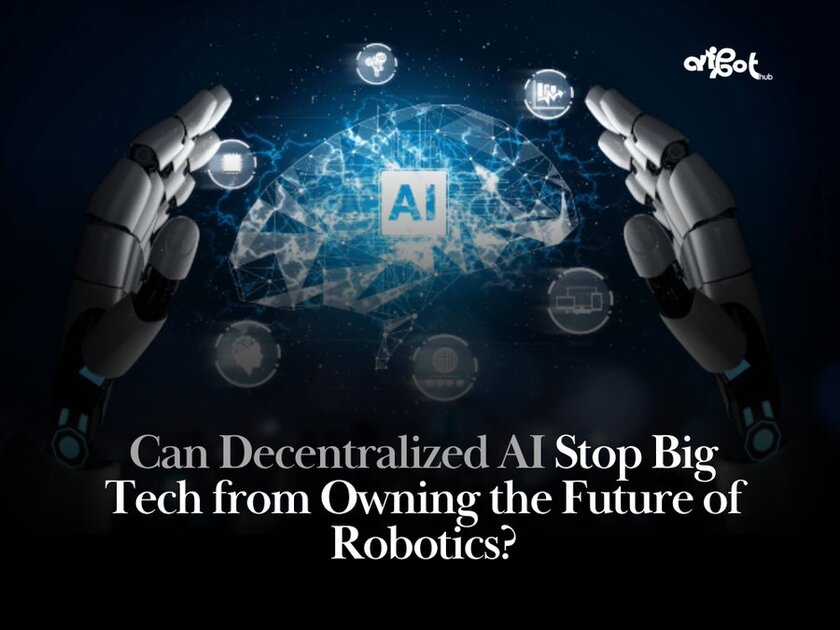
šŸ¤–Can Decentralized AI Stop Big Tech from Owning the Future of Robotics?šŸ¤–
The race to build the future of robotics is no longer just about robots. It's about who controls the intelligence behind them.
Ā 
Over the last three years, a small group of companies has emerged as the backbone of the AI revolution. Microsoft provides cloud infrastructure. NVIDIA supplies the chips. Google, OpenAI, Anthropic, Meta, and others develop the models. Together, they control much of the compute, data, and software stack powering modern AI.
Ā 
Now that AI is moving into the physical world, many are asking a bigger question:
Ā 
Will these same companies end up controlling robotics too?
Ā 
It's a valid concern.
Ā 
The latest generation of robots relies on enormous amounts of compute, simulation, training data, and foundation models. Many robotics startups today are built on infrastructure provided by large technology companies. NVIDIA's Omniverse is becoming a key simulation environment for robot training. Microsoft Azure is powering the training of robotics foundation models. Physical AI startups increasingly depend on hyperscale cloud infrastructure to train and deploy intelligent systems. Recent partnerships across the industry show just how central Big Tech has become to robotics development.
But while Big Tech is building the highways, another movement is trying to ensure it doesn't own every destination.
Ā 
That movement is decentralized AI.
Ā 
Why Decentralized AI Exists
Ā 
The idea behind decentralized AI is simple. Instead of a handful of companies owning the models, compute infrastructure, data pipelines, and intelligence networks, these resources are distributed across thousands of participants.
Ā 
This means anyone can contribute compute, contribute models, validate outputs and can participate.
The most visible example today is the decentralized AI network known as Bittensor (@bittensor). The network has evolved into a large ecosystem of specialized AI markets called subnets, where participants compete to provide useful machine intelligence and are rewarded based on performance. Rather than relying on a single company, intelligence is generated and validated by a distributed network of miners and validators.
Ā 
Think of it as an attempt to build an open marketplace for AI instead of a world where intelligence is rented from a few centralized providers.
Ā 
Why This Matters for Robotics
Ā 
Robotics has a unique problem. Unlike chatbots, robots operate in the physical world. They need to perceive environments, make decisions, move safely and they need to learn continuously.
Ā 
The challenge is that collecting and training on real-world robotic data is incredibly expensive. That's one reason large companies have such an advantage. They can afford the compute, simulation environments, and data infrastructure needed to train robotics models at scale.
Ā 
This is where decentralized systems become interesting.
Ā 
Instead of one company collecting all the data and training all the models, decentralized networks could allow thousands of contributors to participate in building robotic intelligence.
Ā 
Imagine a future where:
  • Warehouse robots contribute operational data.
  • Delivery robots contribute navigation data.
  • Factory robots contribute manipulation data.
  • Developers contribute models.
  • Validators evaluate performance.
The resulting intelligence becomes a shared network rather than a proprietary asset.
Ā 
That vision is beginning to emerge.
Ā 
Bittensor's Move Toward Physical AI
Ā 
While many people associate Bittensor (@bittensor) with language models and AI services, parts of the ecosystem are increasingly exploring embodied intelligence and robotics.
Ā 
One example is Kinitro, a subnet focused on incentivizing the training and evaluation of embodied AI systems. The goal is to create competitive environments where developers build robotic intelligence and are rewarded based on performance.
Ā 
The broader Bittensor ecosystem has also expanded into compute marketplaces, distributed inference systems, bandwidth infrastructure, and AI coordination layers that could eventually support robotics workloads. Several subnets now focus on decentralized compute, confidential inference, data transfer, and model training, critical components for future robotic systems.
Ā 
In other words, the pieces are starting to appear.
Ā 
Not a decentralized robot network yet.
Ā 
But the infrastructure that could support one.
Ā 
Beyond Bittensor: The Rise of Physical AI Networks
Ā 
Bittensor isn't alone.
Ā 
Across the industry, researchers and builders are experimenting with decentralized approaches to physical AI.
Ā 
New research published in 2026 introduced the concept of DAO-enabled decentralized physical AI, or DePAI. The idea combines robotics, decentralized infrastructure, AI models, governance systems, and human oversight into a single framework. Instead of centralized control, robots and physical infrastructure could be coordinated through transparent rules and distributed ownership models.
Ā 
At the same time, developers are exploring decentralized operating systems for robots that allow machines to communicate directly with each other and with distributed compute resources. These architectures are designed to make robotic systems more resilient and less dependent on a single cloud provider.
Ā 
The goal is not simply decentralization for its own sake.
Ā 
The goal is resilience.
Ā 
If one server fails, the system continues.
Ā 
If one company disappears, the network survives.
Ā 
If one participant leaves, innovation continues.
Ā 
But Here's the Reality
Ā 
Decentralized AI faces the same challenge every decentralized technology faces.
Ā 
Big Tech has resources. A lot of resources.
Ā 
Training advanced robotics models requires enormous compute budgets, sophisticated simulation environments, access to specialized hardware, and vast amounts of real-world data.
Ā 
That's why many robotics startups still partner with major cloud providers and AI companies. It's often the fastest path to deployment.
Ā 
And there are legitimate concerns about whether decentralized networks can maintain quality, reliability, and security at the scale required for industrial robotics. Even researchers studying decentralized AI systems have highlighted risks around concentration, incentives, governance, and network security.
Ā 
The challenge isn't just decentralizing intelligence.
Ā 
It's decentralizing intelligence while maintaining performance.
Ā 
That's much harder.
Ā 
The Most Likely Outcome
Ā 
The future probably won't be fully centralized. And it probably won't be fully decentralized either. Instead, we're likely heading toward a hybrid model.
Ā 
Large technology companies will continue providing chips, cloud infrastructure, simulation platforms, and foundational research.
Ā 
At the same time, decentralized AI networks will emerge as alternative coordination layers where intelligence, data, and economic value can be shared more openly.
Ā 
The companies building robots may use NVIDIA hardware.
Ā 
Train on Azure.
Ā 
Run foundation models from OpenAI.
Ā 
But they may also participate in decentralized data networks, decentralized compute markets, and decentralized intelligence protocols.
Ā 
The future of robotics could end up looking less like a monopoly and more like an ecosystem.
Ā 
The Bigger Question
Ā 
The real question isn't whether decentralized AI can eliminate Big Tech.
Ā 
It can't.
Ā 
At least not anytime soon.
Ā 
The real question is whether decentralized AI can prevent a future where a handful of companies control every robot, every model, every dataset, and every decision made by the machines operating around us.
Ā 
As robots become workers, assistants, delivery drivers, factory operators, and even economic agents, that question becomes increasingly important.
Ā 
Because the battle for the future of robotics is no longer about hardware.
Ā 
It's about who owns the intelligence.
Ā 
And that battle is just getting started.
Ā 
Ā 

šŸ™To support my work, Helping to keep the signal high and the noise low:

šŸ‘‰ Cashapp: $thedinarian

šŸ‘‰ Buy me a coffee: https://buymeacoffee.com/thedinarian

šŸ‘‰ PayPal: Scan the QR code below šŸ“² or Click Here:Ā 

šŸ‘‡ Crypto Donations šŸ‘‡

XRP: r9pid4yrQgs6XSFWhMZ8NkxW3gkydWNyQX
XLM: GDMJF2OCHN3NNNX4T4F6POPBTXK23GTNSNQWUMIVKESTHMQM7XDYAIZT
XDC: xdcc2C02203C4f91375889d7AfADB09E207Edf809A6

Read full Article
post photo preview
Navigating the world of blockchain 🧭
Navigating the world of blockchain can feel like learning a completely foreign language. Between technical jargon and fast-moving Web3 terminology, getting started can be overwhelming.

Whether you are exploring digital assets, building on-chain, or simply trying to understand decentralized technology, here is your foundational glossary of essential blockchain terms every beginner should know.

šŸ›ļø 1. Core Architecture: The Base Layer

  • Blockchain: A distributed, immutable digital ledger that records transactions across a peer-to-peer network of computers. Once data is written to a block and added to the chain, it cannot be altered without altering all subsequent blocks.
  • Block: A collection of verified transactions grouped together. Once filled, the block is cryptographically linked to the previous one, forming a chronological "chain."
  • Node: An individual computer connected to a blockchain network that helps validate transactions, store ledger data, and maintain network consensus.
  • Consensus Mechanism: The set of rules and algorithms that network nodes use to agree on the validity of transactions.

    • Proof of Work (PoW): Requires miners to solve complex mathematical puzzles using computational power (e.g., Bitcoin).
    • Proof of Stake (PoS): Requires validators to lock up ("stake") native tokens as collateral to participate in block validation (e.g., Ethereum).

šŸ”‘ 2. Ownership & Security: Wallets and Keys

  • Public Key (Address): An alphanumeric string that acts like your bank account number or email address. It is safe to share publicly so others can send you digital assets.
  • Private Key: A secret cryptographic passphrase or key that grants full access and control over your wallet assets. Never share your private key or seed phrase with anyone.
  • Seed Phrase (Recovery Phrase): A sequence of 12 to 24 random words generated when you set up a wallet. It acts as the master backup key to restore your wallet and access your funds on any device.
  • Hot Wallet vs. Cold Wallet:

    • Hot Wallet: A software-based crypto wallet connected to the internet (e.g., browser extensions, mobile apps), making it convenient for frequent transactions but higher risk.
    • Cold Wallet: An offline hardware device (e.g., Ledger, Coldcard) designed to isolate private keys from internet-connected threats.

āš™ļø 3. Execution & Functionality: Smart Contracts and Apps

  • Smart Contract: Self-executing code stored on a blockchain that automatically enforces agreement terms once predetermined conditions are met—eliminating the need for intermediaries.
  • dApp (Decentralized Application): Applications built on top of a blockchain network that run via smart contracts rather than centralized cloud servers.
  • Gas Fees: Network transaction fees paid to validators or miners to cover the computational energy required to process actions on a blockchain.
  • Layer 1 vs. Layer 2:

    • Layer 1 (L1): The underlying primary blockchain network (e.g., Bitcoin, Ethereum, Solana) that handles base security and finality.
    • Layer 2 (L2): Secondary frameworks or companion networks built on top of an L1 to increase transaction speeds and lower gas fees (e.g., Arbitrum, Optimism, Base).

šŸ’° 4. Financial & Market Concepts

  • Tokenomics: The economic design, supply dynamics, utility, and distribution model of a cryptocurrency or token project.
  • DeFi (Decentralized Finance): Financial services—such as lending, borrowing, trading, and earning interest—built on smart contracts without traditional banks or financial intermediaries.
  • Liquidity: The ease with which an asset can be bought or sold in a market without significantly impacting its price.
  • DYOR (Do Your Own Research): A foundational golden rule in the Web3 space reminding users to independently verify technical code, whitepapers, and team backgrounds before making any capital commitments.

šŸ’” Quick Cheat Sheet

"Not your keys, not your coins."

If you do not hold the private keys or seed phrase to your digital wallet, you do not truly own the assets inside it—a centralized entity or exchange does. Always prioritize security first as you explore the space.

šŸ™To support my work, Helping to keep the signal high and the noise low:

šŸ‘‰ Cashapp: $thedinarian

šŸ‘‰ Buy me a coffee: https://buymeacoffee.com/thedinarian

šŸ‘‰ PayPal: Scan the QR code below šŸ“² or Click Here:Ā 

šŸ‘‡ Crypto Donations šŸ‘‡

XRP: r9pid4yrQgs6XSFWhMZ8NkxW3gkydWNyQX
XLM: GDMJF2OCHN3NNNX4T4F6POPBTXK23GTNSNQWUMIVKESTHMQM7XDYAIZT
XDC: xdcc2C02203C4f91375889d7AfADB09E207Edf809A6

Read full Article
post photo preview
AI Is Coming for Your Job Title

Artificial intelligence may or may not take your job, but it has already broken into the human resources department and vandalized the org chart.

The evidence is all overĀ LinkedIn, where perfectly serviceable occupations now arrive wearing titles such as ā€œforward-deployed and agentic AI architect.ā€ That person may be building sophisticated software. They may also be helping a chatbot remember what happened three prompts ago. Either way, somebody approved the business cards.

The expanding AI lexicon offers a useful counterpoint to the darker debate about technology and employment. Most discussion centers on how many jobs AI will eliminate. Hiring data presents a more complicated picture that includes a weak overall labor market containing a small but rapidly growing neighborhood of AI-related work.

Indeed Hiring LabĀ found that the number of postings onĀ IndeedĀ mentioning AI surged 134% from its February 2020 level by the end of 2025, even as total postings stood only 6% above that benchmark. AI appeared in a record 4.2% of Indeed postings in December.

AI, in other words, is not merely changing work. It is adding syllables to it.

The Titles Employers Actually Want

The undisputed champion isĀ AI engineer, which ranked No. 1 onĀ LinkedIn’s 2026 Jobs on the Rise list. The ranking, based on growth during the previous three years, also highlighted AI consultants and strategists, AI and machine-learning researchers and data annotators.

The title is popular partly because it is wonderfully accommodating. An AI engineer might build applications around large language models, connect corporate data to an AI system, improve model performance or spend Thursday afternoon persuading a customer service bot not to offer refunds for products the company doesn’t sell.

Indeed’s data showed the terminology spreading beyond Silicon Valley. Nearly 45% of data and analytics postings contained an AI-related term at the end of 2025, along with roughly 15% of marketing postings and 9% of human resources listings. A more recent Indeed analysisĀ reportedĀ by Business Insider found that the number of frequently advertised job titles explicitly referencing AI rose from 264 in 2022 to 822 in the first quarter of 2026. Nearly two-thirds were outside traditional technology fields.

That produces titles such as AI marketing manager, AI learning specialist, responsible AI counsel and AI transformation lead. These are not always new occupations. Frequently, they are familiar jobs that have discovered a highly effective rƩsumƩ keyword.

LinkedIn data cited by theĀ World Economic ForumĀ estimated that AI investment has supported 1.3 million positions, including AI engineers, data annotators and forward-deployed engineers, plus more than 600,000 AI-enabled data center jobs. The server racks, unlike the chatbots, still need electricians.

The Jobs With the Science-Fiction Salaries

At the upper end, AI has created a compensation market that resembles professional sports, except the competitors wear hoodies and discuss inference latency.

AĀ Syracuse University reviewĀ put chief AI officer compensation between $200,000 and more than $500,000, while specialized roles can exceed $400,000 after bonuses and equity. Frontier research engineers, AI infrastructure specialists and engineers who can train or deploy advanced models command some of the largest packages.

Then there is theĀ forward-deployed engineer, an oldĀ PalantirĀ title that the AI boom has placed on a rocket sled. These engineers embed with customers, translating an executive’s desire to ā€œdo something with AIā€ into software that works.Ā The Next WebĀ reported that Indeed postings for the role were about 19 times higher in January than a year earlier.

AĀ CTO guideĀ from the blog Signal Through the Noise placed forward-deployed engineer compensation between $238,000 and $700,000, research-engineering packages as high as $1.4 million and chief AI officer compensation above $1 million in some cases. It also made a less flattering observation: Many lavishly differentiated titles describe the same three basic functions. People build AI products, train models or keep the infrastructure from catching fire.

The Department of Unnecessary Titles

AI has created some genuinely new work.Ā Evals engineersĀ design tests to determine whether models perform reliably.Ā AI red teamersĀ try to make systems fail before customers do.Ā Model behavior engineersĀ study why an AI system responds as it does.Ā AI governance leadersĀ manage risks involving data, bias, security and regulation.

Other titles seem to have escaped from a brainstorming retreat.

There is theĀ Claude Evangelist, whose mission apparently combines product education with the traditional duties of an apostle. There areĀ vibe coders, who build software by describing what they want and accepting AI-generated code with varying degrees of supervision. ā€œVibe engineerā€ is the more respectable version, roughly equivalent to putting on a blazer before asking the machine to fix the login page.

ā€œContext engineerā€ is a real discipline involving the data, instructions, memory and tools supplied to AI models. ā€œPrompt engineer,ā€ once advertised as a possible six-figure profession for gifted chatbot whisperers, is increasingly treated as one skill inside a broader AI role.

The CTO guide also identified ā€œbuilder,ā€ ā€œAI-native developer,ā€ ā€œRAG engineer,ā€ ā€œagentic AI engineerā€ and ā€œprincipal agentic GenAI forward-deployed context architect,ā€ the last of which appears to require both technical proficiency and exceptional lung capacity.

Has AI created entirely new jobs? Absolutely. Some occupations, including AI safety, evaluation and model governance, exist because modern generative systems introduced new technical and business problems. However, many job titles are old jobs with fresh vocabulary, higher salary bands and a sudden aversion to the words ā€œsoftware developer.ā€

That may be the safest prediction about AI and employment. The machines will automate some tasks, generate others and force companies to rethink the division of labor. Before any of that is settled, however, corporate America will form a steering committee, appoint a chief agentic transformation evangelist and schedule a meeting to determine what that person does.

Source

šŸ™ Donations Accepted, Thank You For Your Support šŸ™

If you find value in my content, consider showing your support via:

šŸ™ Cashapp: $thedinarian

šŸ™ Buy me a coffee: https://buymeacoffee.com/thedinarian

šŸ™ PayPal: Scan the QR code below šŸ“² or Click Here:Ā 

šŸ™ Crypto Donations šŸ‘‡
XRP: r9pid4yrQgs6XSFWhMZ8NkxW3gkydWNyQX
XLM: GDMJF2OCHN3NNNX4T4F6POPBTXK23GTNSNQWUMIVKESTHMQM7XDYAIZT
XDC: xdcc2C02203C4f91375889d7AfADB09E207Edf809A6

Read full Article
See More
Available on mobile and TV devices
google store google store app store app store
google store google store app tv store app tv store amazon store amazon store roku store roku store
Powered by Locals