TheDinarian
News • Business • Investing & Finance
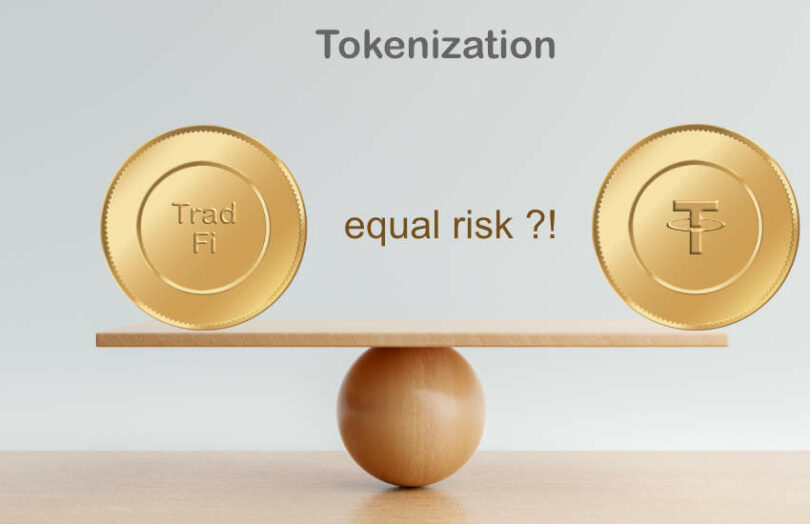
Fed warns of tokenization stability risks. Conflates TradFi, DeFi
September 21, 2023
post photo preview

Earlier this month, the US Federal Reserve published a paper assessing the financial stability implications of tokenization. While it acknowledges that tokenization volumes are currently insignificant, it warns of a host of potential risks. In several instances, the Fed infers that the volatility witnessed in the cryptocurrency sector will impact tokenization. The document barely differentiates between tokens issued by regulated financial institutions and entirely unregulated crypto firms.

For example, the same table lists Tether gold alongside tokenized bonds issued by the European Investment Bank with help from four global systemically important banks. That’s the same Tether brand that was banned by the New York Attorney General for not always fully backing its stablecoin.

The authors acknowledge the “potential” benefits of tokenization of broadening access to markets, programmability and faster settlement. It notes the possibility of using tokenized assets for collateral and positive impacts on liquidity. Citing academic research on ETFs, it states that ETFs improved the liquidity and pricing in the underlying asset markets and tokenization could do the same.

Financial stability risks of tokenization

However, the warnings around tokenization’s risks to financial stability mirror those regarding cryptocurrencies from a few years ago. The interconnectedness between the digital asset system and traditional finance (TradFi) is the primary concern.

Risks include:

  • a firesale in tokenized markets impacting TradFi markets
  • volatility from crypto markets transmitted to underlying reference assets
  • concerns around under-collateralization triggering a run
  • a mismatch between 24/7 token trading versus TradFi trading hours in stress events
  • DeFi automated margin calls triggering liquidations
  • tokenization (like securitization) masking the risks of underlying assets

A few of these risks apply to all tokens. But our observation is that some relate to the crypto world, where unregulated entities perform similar roles to regulated ones without supervision and guardrails. We’re not saying there’s never been fraud and mismanagement in TradFi. But the scale of fraud in crypto is unprecedented. 

There’s a vast difference between an unregulated firm saying “honest, there really is backing for this token,” and a regulated TradFi custodian sharing the data to prove it.

Analysis: Tokenization and rational fire sales

Two paragraphs from the paper are worth highlighting.

“The inability to meet redemptions may perpetuate the fire-sale, decreasing the value of the asset to the point that it may threaten the solvency of any institution holding a sizeable share of the tokenized asset on its balance sheet. Furthermore, if such an institution would benefit from injections of liquidity from traditional money markets, they would be unable to obtain funding on a weekend.”

This theoretical risk could be a real one. But perhaps it also might be overstated. Firstly, one would hope that “institutions” would sufficiently address diversification to avoid such a risk. If they don’t, then lax risk management is going to surface elsewhere.

Secondly, we’ve already seen the working hours mismatch in the crypto world and people behaved rationally. When Silicon Valley Bank collapsed, the USDC stablecoin lost its peg. Additionally, USDC issuer Circle had to curb redemptions over the weekend because banks were closed. USDC’s price did not drop to zero because people know banks are closed over the weekend. The markets marked down USDC only to the extent of writing off roughly the amount deposited at SVB (before the bailout).

Analysis: Ondo Finance held up as a key risk

“Despite being similar in spirit to J.P. Morgan’s first use of tokenized ownership interests in Money Market Fund (MMF) shares as collateral for repo and securities lending transactions, the impact of Ondo Finance’s initiative on traditional financial markets could be involved in a wider range of uses and create more interconnections.”

Ondo is one of the largest DeFi tokenizations of a BlackRock money market fund ($167 million). If Ondo Finance reached the scale of the large stablecoins – and it could – this one is a real risk. However, a key issue is that Ondo is entirely unregulated. It claims to segregate activities between different entities, but without oversight, one has to rely on its word. It also has a DeFi protocol that lends stablecoins using the tokens as collateral.

This paragraph from the paper is one of the few (or perhaps only) recognitions regarding the difference between TradFi tokenizations and crypto ones. While Ondo is a U.S. entity it is not regulated nor are its tokens. It does not offer tokens to U.S. citizens, taking advantage of regulatory arbitrage. Despite promising asset audits since the start, we have yet to see one. However, that doesn’t imply wrongdoing as few auditors are willing to touch the sector.

Tokenization: the big picture

Given the real potential of tokenization, collaboration is needed to address legitimate regulator concerns. However, there’s also a need to educate regulators to stop treating very different tokens as if they carry the same risks. 

Papers such as this might unintentionally give the impression that there’s little point in being regulated. Using regulatory arbitrage, the unregulated get to do as they please, and the regulated are considered just as risky despite incurring all the costs of compliance and supervision

Link

The Dinarian On Locals is a labor of love that I pour my heart and soul into during my personal time. Countless hours are dedicated to delivering you the most up-to-date, unfiltered, and authentic news and information. Your support means the world to me, and I invite you to consider making a donation or becoming a dedicated supporter of this project. XRP donations can be sent to TheDinarian.XRP and are not only appreciated but needed... 


To those of you already backing my efforts, I extend my deepest gratitude. Your generosity fuels this mission, and I genuinely thank you from the depths of my heart. Together, we can continue to bring you the best results and make a significant impact in everyones future! ~D




community logo
Join the TheDinarian Community
To read more articles like this, sign up and join my community today
0
What else you may like…
Videos
Podcasts
Posts
Articles
🤖 AI Won't Destroy Jobs—It Will Create a Labor Shortage! 📉

While most headlines focus on AI-driven displacement, Groq Founder and CEO Jonathan Ross offers a fascinating, contrarian perspective. He argues that instead of mass unemployment, we are heading toward a massive labor shortage driven by three tectonic shifts:

1. Massive Deflationary Pressure: Efficiency gains from automated farming, robotics, and streamlined supply chains will drive down the cost of everyday essentials—from coffee to housing—meaning people will ultimately need less money to thrive. ☕️🏠

2. The Great Economic Opt-Out: As living costs drop and productivity skyrockets, humans will choose to work fewer hours, fewer days a week, and retire much earlier because their lifestyles will be easier to support. ⏳🌴

3. Unimaginable New Industries: Just as agriculture dropped from 98% of the US workforce a century ago to just 2%—paving the way for entirely new careers like software development and content creation—tomorrow's jobs are literally ...

00:02:00
🔵 The most important shape nobody talks about 🔵

Heinz Hopf discovered this in 1931. Roger Penrose called it "an element of the architecture of our world.' Eric Weinstein brought it up on Joe Rogan - and the silence in the room said everything.
The Hopf fibration maps a 4D hypersphere onto a regular sphere using circles that never intersect but each links through every other exactly once. It shows up in at least 8 areas of physics - including the Bloch sphere geometry that every qubit in a quantum computer lives on.

00:09:42
🌐 Institutional Access Meets Dcentralized AI! 🤖📈

The bridge between traditional capital markets and the decentralized AI economy is expanding. Through investment vehicles like the Grayscale Bittensor Trust ($GTAO), traditional market participants gain regulated exposure to the native asset powering decentralized machine learning.

No wallet setups, no complex custody hurdles—just direct tracking of the infrastructure driving open-source intelligence.👇

00:05:18
🚨 Chutes is being framed as a Hyperliquid-style breakout for decentralized AI inference, with live revenue, verified GPU infrastructure, and a direct challenge to centralized cloud AI 🚨

Chutes is gaining attention as a decentralized AI inference platform that claims to combine real usage, cryptographic verification, confidential computing, and open-source infrastructure into a working production system. The thesis is simple: instead of trusting Big Tech clouds with AI workloads, users get a distributed compute layer built around verification and privacy.

🔑 Key points

🔹 Chutes is live in production and reportedly scaled to more than 1,170 active GPU nodes, including large numbers of Nvidia H200s and Blackwell-class hardware.

🔹 The platform says it has processed nearly 38 trillion tokens since launch across 53 deployed applications and more than 700,000 registered users.

🔹 The team reportedly cut unprofitable usage programs, reduced total token volume, and still improved revenue efficiency, with revenue per GPU rising sharply after removing subsidized traffic.

🔹 Chutes is using post-quantum cryptography, trusted execution environments, and Nvidia confidential ...

🚨 Chutes is being framed as a Hyperliquid-style breakout for decentralized AI inference, with live revenue, verified GPU infrastructure, and a direct challenge to centralized cloud AI 🚨
🚨 JPMorgan’s criticism of the CLARITY Act is fueling a fresh power struggle over who gets to write America’s crypto rules 🚨

A new clash is emerging between legacy finance and crypto legislation after JPMorgan CEO Jamie Dimon reportedly warned that the CLARITY Act could let crypto firms offer bank-like products without bank-level oversight. The dispute is quickly turning into a larger fight over regulation, competitiveness, and who controls the future architecture of digital finance in the United States.

🔑 Key points

🔹 Jamie Dimon reportedly called the CLARITY Act a threat to the financial system, arguing it could allow crypto firms to offer yield-like products while avoiding the capital, reserve, and oversight burdens traditional banks face.

🔹 Senator Cynthia Lummis pushed back publicly, framing the issue as a global strategic race and warning that if the U.S. does not set digital asset standards, other powers will.

🔹 The core tension is whether the bill creates legitimate regulatory clarity or simply opens the door to regulatory arbitrage for crypto platforms operating outside the traditional banking...

🚨 JPMorgan’s criticism of the CLARITY Act is fueling a fresh power struggle over who gets to write America’s crypto rules 🚨
👉 Coinbase just launched an AI agent for Crypto Trading

Custom AI assistants that print money in your sleep? 🔜

The future of Crypto x AI is about to go crazy.

👉 Here’s what you need to know:

💠 'Based Agent' enables creation of custom AI agents
💠 Users set up personalized agents in < 3 minutes
💠 Equipped w/ crypto wallet and on-chain functions
💠 Capable of completing trades, swaps, and staking
💠 Integrates with Coinbase’s SDK, OpenAI, & Replit

👉 What this means for the future of Crypto:

1. Open Access: Democratized access to advanced trading
2. Automated Txns: Complex trades + streamlined on-chain activity
3. AI Dominance: Est ~80% of crypto 👉txns done by AI agents by 2025

🚨 I personally wouldn't bet against Brian Armstrong and Jesse Pollak.

👉 Coinbase just launched an AI agent for Crypto Trading
The Government Is Tracking Your Silver...

Hippius (hippius.com) offers storage at a lower price per terabyte than Google Drive, iCloud, and Dropbox.

1/100th the cost (!)

Only possible on Bittensor $TAO

Now with a Dropbox-like desktop storage app as well as an S3-compatible API.

post photo preview
🚨 BREAKING: XRP JUST GOT PLUGGED DIRECTLY INTO THE U.S. FEDERAL RESERVE’S FEDNOW SYSTEM 😳

Volante’s Ripple integration just unlocked $XRP for INSTANT FedNow payments.
Banks can now settle through XRP on the same rails the Fed uses for 24/7 real-time transfers.

This is the quiet infrastructure move nobody saw coming… until now.

The bridge is LIVE.

https://x.com/pumpius/status/2091584402107314186

Irrespective of which tokens are utilized on the XRP Ledger for FedNow transactions, the underlying mechanism that burns XRP remains constant. 🔥 This sustained reduction in supply underpins a long-term bullish thesis for XRP holders. 📈📈🚀

post photo preview
post photo preview
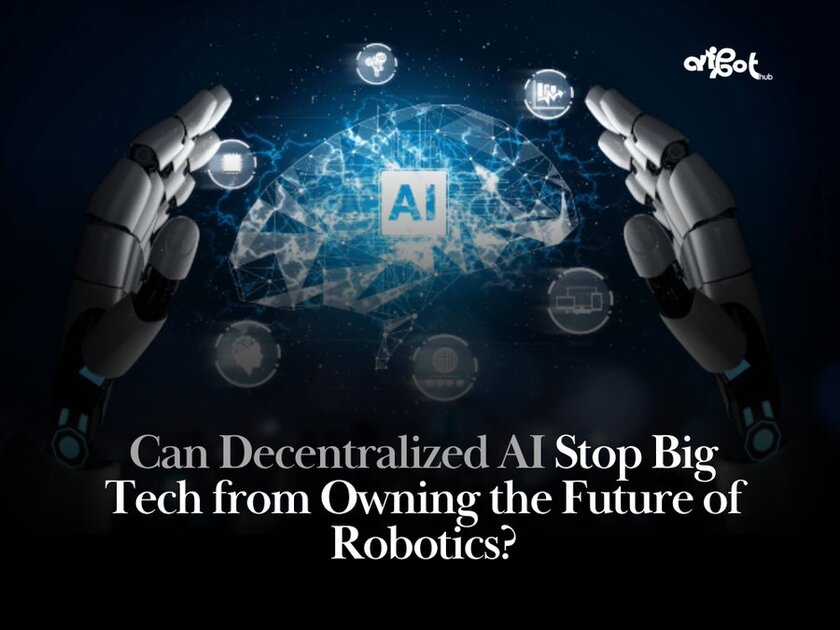
🤖Can Decentralized AI Stop Big Tech from Owning the Future of Robotics?🤖
The race to build the future of robotics is no longer just about robots. It's about who controls the intelligence behind them.
 
Over the last three years, a small group of companies has emerged as the backbone of the AI revolution. Microsoft provides cloud infrastructure. NVIDIA supplies the chips. Google, OpenAI, Anthropic, Meta, and others develop the models. Together, they control much of the compute, data, and software stack powering modern AI.
 
Now that AI is moving into the physical world, many are asking a bigger question:
 
Will these same companies end up controlling robotics too?
 
It's a valid concern.
 
The latest generation of robots relies on enormous amounts of compute, simulation, training data, and foundation models. Many robotics startups today are built on infrastructure provided by large technology companies. NVIDIA's Omniverse is becoming a key simulation environment for robot training. Microsoft Azure is powering the training of robotics foundation models. Physical AI startups increasingly depend on hyperscale cloud infrastructure to train and deploy intelligent systems. Recent partnerships across the industry show just how central Big Tech has become to robotics development.
But while Big Tech is building the highways, another movement is trying to ensure it doesn't own every destination.
 
That movement is decentralized AI.
 
Why Decentralized AI Exists
 
The idea behind decentralized AI is simple. Instead of a handful of companies owning the models, compute infrastructure, data pipelines, and intelligence networks, these resources are distributed across thousands of participants.
 
This means anyone can contribute compute, contribute models, validate outputs and can participate.
The most visible example today is the decentralized AI network known as Bittensor (@bittensor). The network has evolved into a large ecosystem of specialized AI markets called subnets, where participants compete to provide useful machine intelligence and are rewarded based on performance. Rather than relying on a single company, intelligence is generated and validated by a distributed network of miners and validators.
 
Think of it as an attempt to build an open marketplace for AI instead of a world where intelligence is rented from a few centralized providers.
 
Why This Matters for Robotics
 
Robotics has a unique problem. Unlike chatbots, robots operate in the physical world. They need to perceive environments, make decisions, move safely and they need to learn continuously.
 
The challenge is that collecting and training on real-world robotic data is incredibly expensive. That's one reason large companies have such an advantage. They can afford the compute, simulation environments, and data infrastructure needed to train robotics models at scale.
 
This is where decentralized systems become interesting.
 
Instead of one company collecting all the data and training all the models, decentralized networks could allow thousands of contributors to participate in building robotic intelligence.
 
Imagine a future where:
  • Warehouse robots contribute operational data.
  • Delivery robots contribute navigation data.
  • Factory robots contribute manipulation data.
  • Developers contribute models.
  • Validators evaluate performance.
The resulting intelligence becomes a shared network rather than a proprietary asset.
 
That vision is beginning to emerge.
 
Bittensor's Move Toward Physical AI
 
While many people associate Bittensor (@bittensor) with language models and AI services, parts of the ecosystem are increasingly exploring embodied intelligence and robotics.
 
One example is Kinitro, a subnet focused on incentivizing the training and evaluation of embodied AI systems. The goal is to create competitive environments where developers build robotic intelligence and are rewarded based on performance.
 
The broader Bittensor ecosystem has also expanded into compute marketplaces, distributed inference systems, bandwidth infrastructure, and AI coordination layers that could eventually support robotics workloads. Several subnets now focus on decentralized compute, confidential inference, data transfer, and model training, critical components for future robotic systems.
 
In other words, the pieces are starting to appear.
 
Not a decentralized robot network yet.
 
But the infrastructure that could support one.
 
Beyond Bittensor: The Rise of Physical AI Networks
 
Bittensor isn't alone.
 
Across the industry, researchers and builders are experimenting with decentralized approaches to physical AI.
 
New research published in 2026 introduced the concept of DAO-enabled decentralized physical AI, or DePAI. The idea combines robotics, decentralized infrastructure, AI models, governance systems, and human oversight into a single framework. Instead of centralized control, robots and physical infrastructure could be coordinated through transparent rules and distributed ownership models.
 
At the same time, developers are exploring decentralized operating systems for robots that allow machines to communicate directly with each other and with distributed compute resources. These architectures are designed to make robotic systems more resilient and less dependent on a single cloud provider.
 
The goal is not simply decentralization for its own sake.
 
The goal is resilience.
 
If one server fails, the system continues.
 
If one company disappears, the network survives.
 
If one participant leaves, innovation continues.
 
But Here's the Reality
 
Decentralized AI faces the same challenge every decentralized technology faces.
 
Big Tech has resources. A lot of resources.
 
Training advanced robotics models requires enormous compute budgets, sophisticated simulation environments, access to specialized hardware, and vast amounts of real-world data.
 
That's why many robotics startups still partner with major cloud providers and AI companies. It's often the fastest path to deployment.
 
And there are legitimate concerns about whether decentralized networks can maintain quality, reliability, and security at the scale required for industrial robotics. Even researchers studying decentralized AI systems have highlighted risks around concentration, incentives, governance, and network security.
 
The challenge isn't just decentralizing intelligence.
 
It's decentralizing intelligence while maintaining performance.
 
That's much harder.
 
The Most Likely Outcome
 
The future probably won't be fully centralized. And it probably won't be fully decentralized either. Instead, we're likely heading toward a hybrid model.
 
Large technology companies will continue providing chips, cloud infrastructure, simulation platforms, and foundational research.
 
At the same time, decentralized AI networks will emerge as alternative coordination layers where intelligence, data, and economic value can be shared more openly.
 
The companies building robots may use NVIDIA hardware.
 
Train on Azure.
 
Run foundation models from OpenAI.
 
But they may also participate in decentralized data networks, decentralized compute markets, and decentralized intelligence protocols.
 
The future of robotics could end up looking less like a monopoly and more like an ecosystem.
 
The Bigger Question
 
The real question isn't whether decentralized AI can eliminate Big Tech.
 
It can't.
 
At least not anytime soon.
 
The real question is whether decentralized AI can prevent a future where a handful of companies control every robot, every model, every dataset, and every decision made by the machines operating around us.
 
As robots become workers, assistants, delivery drivers, factory operators, and even economic agents, that question becomes increasingly important.
 
Because the battle for the future of robotics is no longer about hardware.
 
It's about who owns the intelligence.
 
And that battle is just getting started.


🙏To support my work, Helping to keep the signal high and the noise low:

👉 Cashapp: $thedinarian

👉 Buy me a coffee: https://buymeacoffee.com/thedinarian

👉 PayPal: Scan the QR code below 📲 or Click Here

👇 Crypto Donations 👇

XRP: r9pid4yrQgs6XSFWhMZ8NkxW3gkydWNyQX
XLM: GDMJF2OCHN3NNNX4T4F6POPBTXK23GTNSNQWUMIVKESTHMQM7XDYAIZT
XDC: xdcc2C02203C4f91375889d7AfADB09E207Edf809A6

Read full Article
post photo preview
Navigating the world of blockchain 🧭
Navigating the world of blockchain can feel like learning a completely foreign language. Between technical jargon and fast-moving Web3 terminology, getting started can be overwhelming.

Whether you are exploring digital assets, building on-chain, or simply trying to understand decentralized technology, here is your foundational glossary of essential blockchain terms every beginner should know.

🏛️ 1. Core Architecture: The Base Layer

  • Blockchain: A distributed, immutable digital ledger that records transactions across a peer-to-peer network of computers. Once data is written to a block and added to the chain, it cannot be altered without altering all subsequent blocks.
  • Block: A collection of verified transactions grouped together. Once filled, the block is cryptographically linked to the previous one, forming a chronological "chain."
  • Node: An individual computer connected to a blockchain network that helps validate transactions, store ledger data, and maintain network consensus.
  • Consensus Mechanism: The set of rules and algorithms that network nodes use to agree on the validity of transactions.

    • Proof of Work (PoW): Requires miners to solve complex mathematical puzzles using computational power (e.g., Bitcoin).
    • Proof of Stake (PoS): Requires validators to lock up ("stake") native tokens as collateral to participate in block validation (e.g., Ethereum).

🔑 2. Ownership & Security: Wallets and Keys

  • Public Key (Address): An alphanumeric string that acts like your bank account number or email address. It is safe to share publicly so others can send you digital assets.
  • Private Key: A secret cryptographic passphrase or key that grants full access and control over your wallet assets. Never share your private key or seed phrase with anyone.
  • Seed Phrase (Recovery Phrase): A sequence of 12 to 24 random words generated when you set up a wallet. It acts as the master backup key to restore your wallet and access your funds on any device.
  • Hot Wallet vs. Cold Wallet:

    • Hot Wallet: A software-based crypto wallet connected to the internet (e.g., browser extensions, mobile apps), making it convenient for frequent transactions but higher risk.
    • Cold Wallet: An offline hardware device (e.g., Ledger, Coldcard) designed to isolate private keys from internet-connected threats.

⚙️ 3. Execution & Functionality: Smart Contracts and Apps

  • Smart Contract: Self-executing code stored on a blockchain that automatically enforces agreement terms once predetermined conditions are met—eliminating the need for intermediaries.
  • dApp (Decentralized Application): Applications built on top of a blockchain network that run via smart contracts rather than centralized cloud servers.
  • Gas Fees: Network transaction fees paid to validators or miners to cover the computational energy required to process actions on a blockchain.
  • Layer 1 vs. Layer 2:

    • Layer 1 (L1): The underlying primary blockchain network (e.g., Bitcoin, Ethereum, Solana) that handles base security and finality.
    • Layer 2 (L2): Secondary frameworks or companion networks built on top of an L1 to increase transaction speeds and lower gas fees (e.g., Arbitrum, Optimism, Base).

💰 4. Financial & Market Concepts

  • Tokenomics: The economic design, supply dynamics, utility, and distribution model of a cryptocurrency or token project.
  • DeFi (Decentralized Finance): Financial services—such as lending, borrowing, trading, and earning interest—built on smart contracts without traditional banks or financial intermediaries.
  • Liquidity: The ease with which an asset can be bought or sold in a market without significantly impacting its price.
  • DYOR (Do Your Own Research): A foundational golden rule in the Web3 space reminding users to independently verify technical code, whitepapers, and team backgrounds before making any capital commitments.

💡 Quick Cheat Sheet

"Not your keys, not your coins."

If you do not hold the private keys or seed phrase to your digital wallet, you do not truly own the assets inside it—a centralized entity or exchange does. Always prioritize security first as you explore the space.

🙏To support my work, Helping to keep the signal high and the noise low:

👉 Cashapp: $thedinarian

👉 Buy me a coffee: https://buymeacoffee.com/thedinarian

👉 PayPal: Scan the QR code below 📲 or Click Here

👇 Crypto Donations 👇

XRP: r9pid4yrQgs6XSFWhMZ8NkxW3gkydWNyQX
XLM: GDMJF2OCHN3NNNX4T4F6POPBTXK23GTNSNQWUMIVKESTHMQM7XDYAIZT
XDC: xdcc2C02203C4f91375889d7AfADB09E207Edf809A6

Read full Article
post photo preview
AI Is Coming for Your Job Title

Artificial intelligence may or may not take your job, but it has already broken into the human resources department and vandalized the org chart.

The evidence is all over LinkedIn, where perfectly serviceable occupations now arrive wearing titles such as “forward-deployed and agentic AI architect.” That person may be building sophisticated software. They may also be helping a chatbot remember what happened three prompts ago. Either way, somebody approved the business cards.

The expanding AI lexicon offers a useful counterpoint to the darker debate about technology and employment. Most discussion centers on how many jobs AI will eliminate. Hiring data presents a more complicated picture that includes a weak overall labor market containing a small but rapidly growing neighborhood of AI-related work.

Indeed Hiring Lab found that the number of postings on Indeed mentioning AI surged 134% from its February 2020 level by the end of 2025, even as total postings stood only 6% above that benchmark. AI appeared in a record 4.2% of Indeed postings in December.

AI, in other words, is not merely changing work. It is adding syllables to it.

The Titles Employers Actually Want

The undisputed champion is AI engineer, which ranked No. 1 on LinkedIn’s 2026 Jobs on the Rise list. The ranking, based on growth during the previous three years, also highlighted AI consultants and strategists, AI and machine-learning researchers and data annotators.

The title is popular partly because it is wonderfully accommodating. An AI engineer might build applications around large language models, connect corporate data to an AI system, improve model performance or spend Thursday afternoon persuading a customer service bot not to offer refunds for products the company doesn’t sell.

Indeed’s data showed the terminology spreading beyond Silicon Valley. Nearly 45% of data and analytics postings contained an AI-related term at the end of 2025, along with roughly 15% of marketing postings and 9% of human resources listings. A more recent Indeed analysis reported by Business Insider found that the number of frequently advertised job titles explicitly referencing AI rose from 264 in 2022 to 822 in the first quarter of 2026. Nearly two-thirds were outside traditional technology fields.

That produces titles such as AI marketing manager, AI learning specialist, responsible AI counsel and AI transformation lead. These are not always new occupations. Frequently, they are familiar jobs that have discovered a highly effective résumé keyword.

LinkedIn data cited by the World Economic Forum estimated that AI investment has supported 1.3 million positions, including AI engineers, data annotators and forward-deployed engineers, plus more than 600,000 AI-enabled data center jobs. The server racks, unlike the chatbots, still need electricians.

The Jobs With the Science-Fiction Salaries

At the upper end, AI has created a compensation market that resembles professional sports, except the competitors wear hoodies and discuss inference latency.

Syracuse University review put chief AI officer compensation between $200,000 and more than $500,000, while specialized roles can exceed $400,000 after bonuses and equity. Frontier research engineers, AI infrastructure specialists and engineers who can train or deploy advanced models command some of the largest packages.

Then there is the forward-deployed engineer, an old Palantir title that the AI boom has placed on a rocket sled. These engineers embed with customers, translating an executive’s desire to “do something with AI” into software that works. The Next Web reported that Indeed postings for the role were about 19 times higher in January than a year earlier.

CTO guide from the blog Signal Through the Noise placed forward-deployed engineer compensation between $238,000 and $700,000, research-engineering packages as high as $1.4 million and chief AI officer compensation above $1 million in some cases. It also made a less flattering observation: Many lavishly differentiated titles describe the same three basic functions. People build AI products, train models or keep the infrastructure from catching fire.

The Department of Unnecessary Titles

AI has created some genuinely new work. Evals engineers design tests to determine whether models perform reliably. AI red teamers try to make systems fail before customers do. Model behavior engineers study why an AI system responds as it does. AI governance leaders manage risks involving data, bias, security and regulation.

Other titles seem to have escaped from a brainstorming retreat.

There is the Claude Evangelist, whose mission apparently combines product education with the traditional duties of an apostle. There are vibe coders, who build software by describing what they want and accepting AI-generated code with varying degrees of supervision. “Vibe engineer” is the more respectable version, roughly equivalent to putting on a blazer before asking the machine to fix the login page.

“Context engineer” is a real discipline involving the data, instructions, memory and tools supplied to AI models. “Prompt engineer,” once advertised as a possible six-figure profession for gifted chatbot whisperers, is increasingly treated as one skill inside a broader AI role.

The CTO guide also identified “builder,” “AI-native developer,” “RAG engineer,” “agentic AI engineer” and “principal agentic GenAI forward-deployed context architect,” the last of which appears to require both technical proficiency and exceptional lung capacity.

Has AI created entirely new jobs? Absolutely. Some occupations, including AI safety, evaluation and model governance, exist because modern generative systems introduced new technical and business problems. However, many job titles are old jobs with fresh vocabulary, higher salary bands and a sudden aversion to the words “software developer.”

That may be the safest prediction about AI and employment. The machines will automate some tasks, generate others and force companies to rethink the division of labor. Before any of that is settled, however, corporate America will form a steering committee, appoint a chief agentic transformation evangelist and schedule a meeting to determine what that person does.

Source

🙏 Donations Accepted, Thank You For Your Support 🙏

If you find value in my content, consider showing your support via:

🙏 Cashapp: $thedinarian

🙏 Buy me a coffee: https://buymeacoffee.com/thedinarian

🙏 PayPal: Scan the QR code below 📲 or Click Here

🙏 Crypto Donations 👇
XRP: r9pid4yrQgs6XSFWhMZ8NkxW3gkydWNyQX
XLM: GDMJF2OCHN3NNNX4T4F6POPBTXK23GTNSNQWUMIVKESTHMQM7XDYAIZT
XDC: xdcc2C02203C4f91375889d7AfADB09E207Edf809A6

Read full Article
See More
Available on mobile and TV devices
google store google store app store app store
google store google store app tv store app tv store amazon store amazon store roku store roku store
Powered by Locals