“The pace of the decline is striking, particularly in the absence of major shocks,” Yue Su, principal economist at the UK-based Economist Intelligence Unit, told CNBC.
Rapid Demographic Contraction
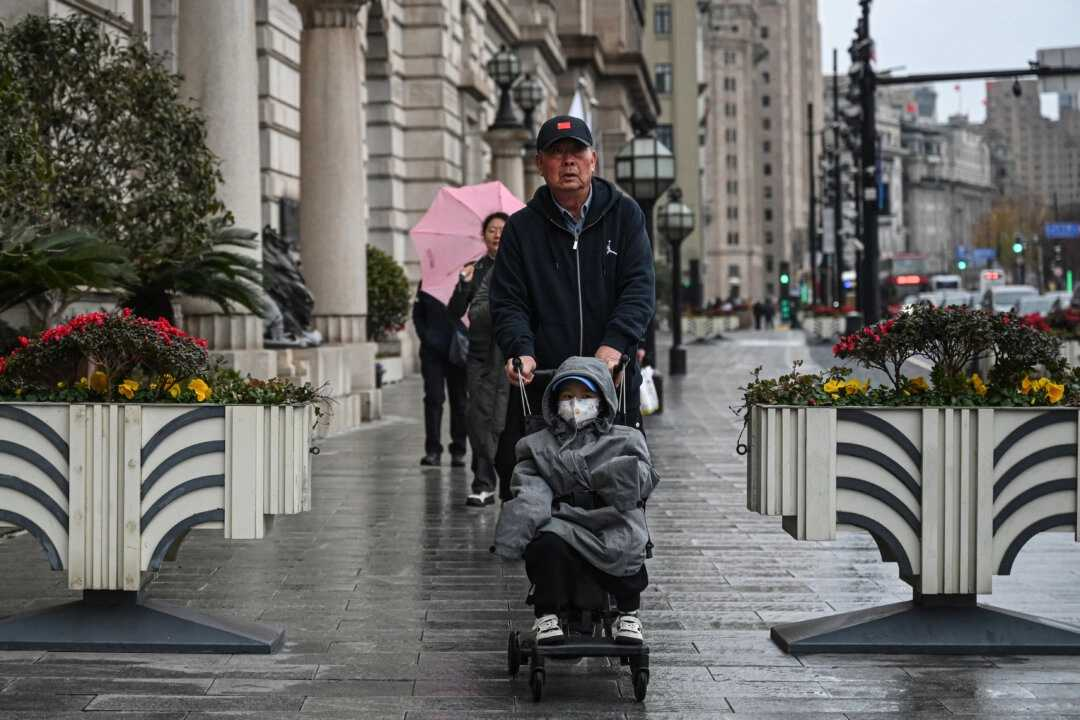
While falling birthrates are a common phenomenon in many countries, analysts say China’s trajectory stands apart in both speed and scale.China’s National Bureau of Statistics (NBS) announced on Jan. 19 that the country recorded just 7.92 million births in 2025, down from 9.54 million in 2024 and the lowest number in decades. China’s total population fell for the fourth consecutive year, shrinking by 3.39 million people—the steepest annual decline since population contraction began in 2022.
The collapse in births follows decades of the Chinese regime’s brutal one-child policy from 1979 until 2015, using heavy fines, job penalties, and even forced abortions to limit family size. The policy succeeded in slowing population growth but also accelerated population aging.
Chinese state-controlled media NetEase reported China’s total fertility rate (TFR) was below 1 birth per woman for 2025, citing China-based scholars.
The World Economic Forum (WEF) estimated in 2022 that in the late 1980s, China’s total fertility rate—the average number of children born to each woman—stood at 2.6, and since 1994, China’s fertility rate has hovered between 1.6 and 1.7, before falling to 1.3 in 2020 and dropping further to just 1.15 in 2021.
This marks the first instance of sustained population decline in China outside of the three famine years since the founding of the People’s Republic in 1949.
National Bureau of Statistics data show that China’s natural population growth rate in 2025 fell to negative 2.41 per thousand, while the death rate rose to 8.04 per thousand, the highest level since 1968.
U.S.-based China current affairs commentator Wang He described the pace of decline as historically rare.
“In 2016, China had more than 17 million newborns,” Wang told The Epoch Times. “Ten years later, births have fallen by more than 10 million. A collapse of this magnitude in peacetime is extremely uncommon in world history.”
Questions Over the Numbers
Some analysts believe the official figures may still overstate the true number of births.Japan-based Hong Kong journalist and economist Joseph Lian said in a 2023 interview with The Epoch Times that the Chinese regime’s population data manipulation likely began as early as the 1990s.
“By the mid-2000s, it became clear that population growth was losing momentum, and large-scale data inflation began,” he said.
According to Wang, the Chinese regime controls multiple parallel datasets—including the public security bureau’s household registration records, hospital birth data, and primary school enrollment figures—none of which are publicly accessible.
“How much the data is adjusted, and to what extent, outsiders can only guess,” he said.
Why Young Chinese People Aren’t Having Children
China’s demographic crisis is unfolding despite years of regime efforts to encourage childbirth. Authorities have rolled out birth subsidies, simplified marriage registration, extended maternity leave, and even imposed a 13 percent tax on condoms. None of it has reversed the trend.For many young Chinese people, the barriers to starting a family remain overwhelming.
Chinese state media China National Radio cited a 2024 survey by the YuWa Population Research Institute that found that the average cost of raising a child to high school graduation in China is about 538,000 yuan ($75,000), more than six times China’s per-capita gross domestic product (GDP). In major cities, the cost is even higher. By comparison, the figure is about 4.1 times per-capita GDP in the United States and 4.26 in Japan.
“China’s pronatalist policies have not reversed fertility decline or increased population growth to a sustainable rate, demonstrating the limits of state-led interventions in family decision-making,” RAND analysts wrote.
U.S.-based Chinese economist Li Hengqing noted that childlessness is often a reluctant choice.
“For average Chinese [families], having children is about lineage, emotional security, and hope,” Li told The Epoch Times. “Not having children is an extremely painful and involuntary decision.”
Wang sees the demographic collapse as a form of collective protest.
“In a sense, this is the public casting its vote,” he said. “By refusing to have children, people are expressing their anger—and their despair.”
Economic Consequences
Economists warn that no society has achieved sustained economic growth amid long-term population decline.China now faces a rapidly aging population alongside a shrinking labor force. Fewer newborns today means fewer workers tomorrow, making it harder to support an expanding elderly population and placing additional strain on an already fragile pension system.
According to the Chinese Communist Party’s State Council, by 2035, the number of people aged 60 and above is expected to reach 400 million, which will be more than 30 percent of the country’s population.
A 2019 report by the Chinese Academy of Social Sciences estimated that China’s pension reserves could be exhausted by 2035.

🙏 Donations Accepted, Thank You For Your Support 🙏
If you find value in my content, consider showing your support via:
💳 Stripe:
1) or visit http://thedinarian.locals.com/donate
💳 PayPal:
2) Simply scan the QR code below 📲 or Click Here: https://www.paypal.com/donate/?business=8K3TZ2YFZ7SMU&no_recurring=0&item_name=Support+Crypto+Michael+%E2%9A%A1+Dinarian+on+Locals+Blog¤cy_code=USD

🔗 Crypto Donations Graciously Accepted👇
XRP: r9pid4yrQgs6XSFWhMZ8NkxW3gkydWNyQX
XLM: GDMJF2OCHN3NNNX4T4F6POPBTXK23GTNSNQWUMIVKESTHMQM7XDYAIZT
XDC: xdcc2C02203C4f91375889d7AfADB09E207Edf809A6